

FARMED ANIMALS / Chickens

About Chickens

Intelligent, Cognitive Birds

“It is now clear that birds have cognitive capacities equivalent to those of mammals, even primates…”

- Dr. Lesley Rogers

Renowned Neuroscientist

A Brief History of Chickens

From wild jungle ancestors to the chickens of today.

01

The Red Junglefowl

Modern chickens descend primarily from the red junglefowl, a wild bird native to Southeast Asia. These intelligent and social birds once lived freely in forests and dense vegetation, displaying complex natural behaviours.

02

The Beginning of Domestication

Thousands of years ago, humans began domesticating junglefowl in parts of Southeast Asia. Over generations, these birds gradually became the domestic chickens we know today.

03

Chickens Around the World

Through human migration, trade and exploration, chickens spread across the world. Different breeds developed, adapting to diverse climates and environments. They became part of many cultures and communities.

04

Chickens Today

Today, billions of chickens are raised worldwide, with many living in intensive farming systems. Selective breeding has dramatically changed their bodies and growth rates, often prioritising production over their natural behaviours, physical well-being and individual needs.

10 Fascinating
Facts About Chickens

Did you know chickens can see a wider range of colours than humans? Intelligent, social and full of fascinating behaviours, chickens are remarkable individuals who have shared our world for thousands of years.
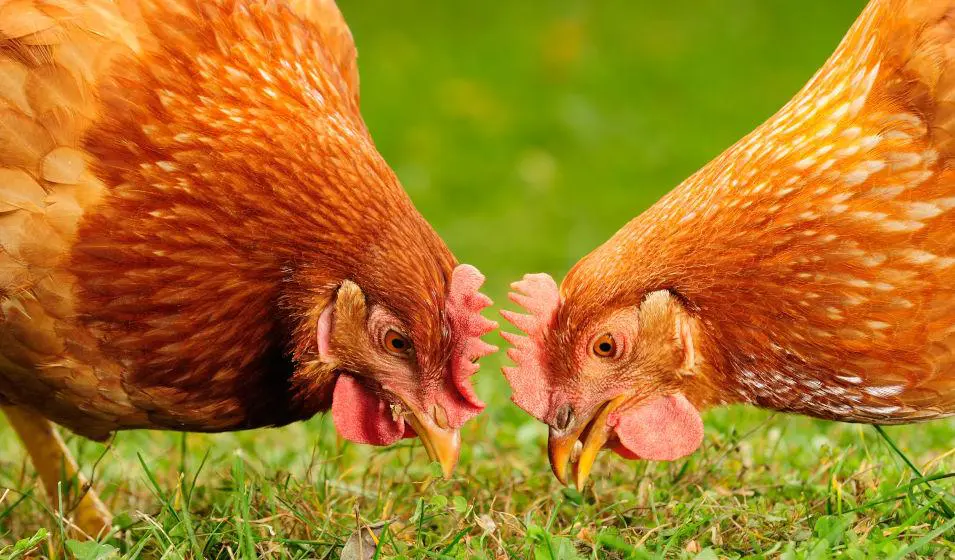
Two brown hens standing side by side, pecking at the grass together in a green outdoor setting.
01

They Love to Play

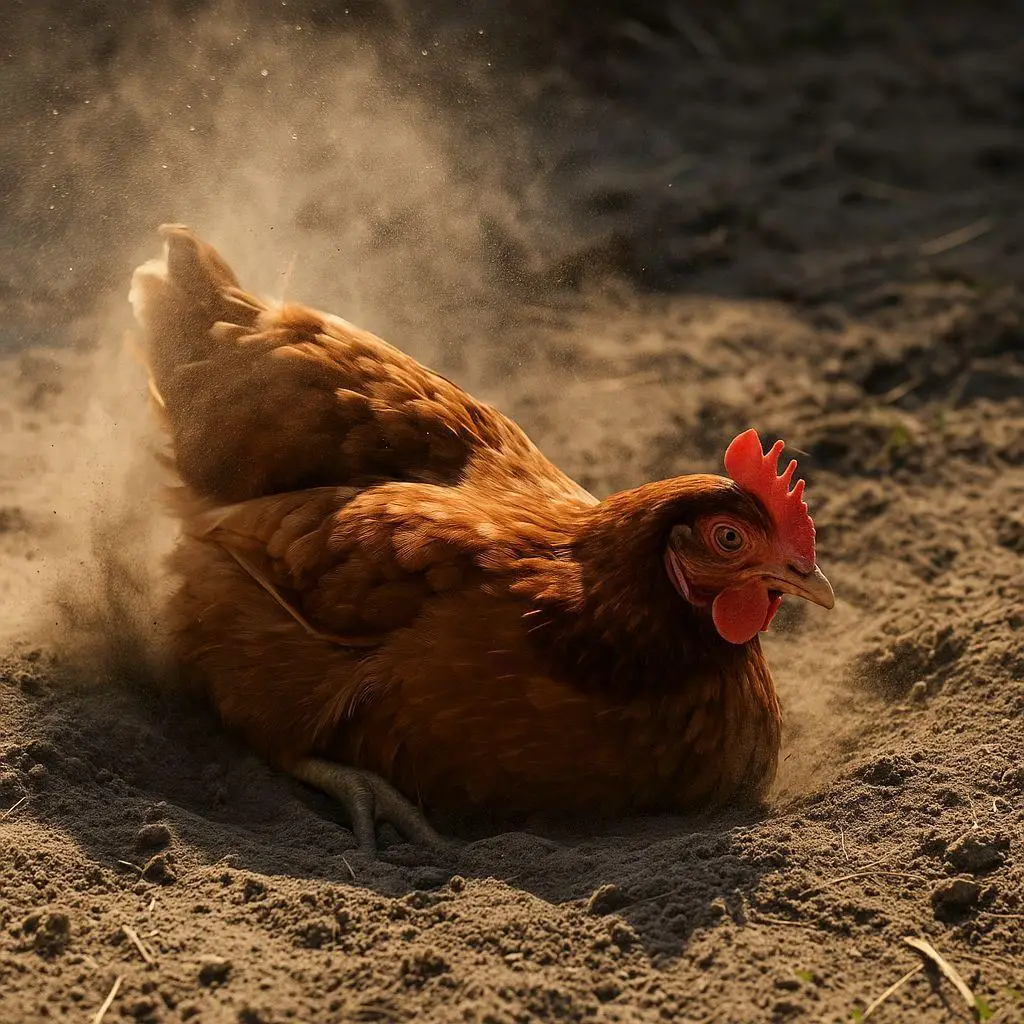
Chickens enjoy running, jumping, stretching their wings and playing. They also love basking in the sunshine and taking dust baths.

02

They Communicate Before Hatching

Mother hens communicate with their chicks while they are still inside their eggs, helping them become familiar with each other’s voices before birth.

03

They Have Remarkable Memories

Chickens can recognise and remember more than 100 individual faces, including other chickens and familiar humans.

04

They See a More Colourful World

Unlike humans, chickens can see ultraviolet light. Their remarkable vision allows them to perceive colours and patterns invisible to us.

05

They Experience REM Sleep

Chickens experience REM (Rapid Eye Movement) sleep, a stage associated with dreaming in humans and many other animals.

06

They Can Show Empathy

Hens respond to signs of distress in their chicks and can experience emotional reactions to what happens to their young.

07

They Are Remarkably Intelligent

Chickens can solve problems, learn from experience, exercise self-control and demonstrate cognitive abilities comparable to those of some mammals.

08

They Can Feel Pain

Chickens have specialised nerve receptors that detect painful stimuli. Like other animals, they are capable of experiencing pain and suffering.

09

They Have a Unique Sense of Taste

Chickens can detect salty, sour, bitter and umami flavours, but unlike humans, they have very limited ability to taste sweetness.

10

They Understand That Hidden Things Still Exist

Chickens understand object permanence: they know that an object continues to exist even when it disappears from sight.

The Natural Life of Chickens

Chickens are naturally curious, active and social birds with rich and complex lives. In their natural environment, they spend much of their day exploring, scratching the ground, searching for seeds and insects, and investigating everything around them. They enjoy roaming freely, running, stretching their wings and basking in the sunshine. Dust bathing is another important part of their daily routine, helping them maintain healthy feathers and keep comfortable. These seemingly simple activities are essential expressions of their natural instincts and individual personalities.

Life among other chickens is equally important. They form close social relationships, recognise familiar individuals and communicate through a wide range of vocalisations and body language. Within their flocks, they establish social hierarchies, develop preferences and learn from one another. Hens also display remarkable maternal instincts, carefully preparing nests, communicating with their developing chicks and protecting them after hatching. At night, chickens naturally seek elevated places, such as tree branches, where they can perch and rest safely.

Like all animals, chickens have their own physical, emotional and behavioural needs. They need space to move freely, opportunities to forage and explore, suitable places to nest and dust bathe, and the companionship of other chickens. Yet in intensive farming systems, many are denied the freedom to express these essential natural behaviours. Understanding how chickens naturally live helps us recognise them not as mere producers of eggs or meat, but as sentient individuals with their own needs, relationships and a life worth respecting.

Tip: One of the best ways to experience chickens' natural behaviour is to visit a farm animal sanctuary, where they can roam freely, forage, dust bathe, form friendships and care for their chicks in a safe and peaceful environment. See for yourself what life looks like when chickens are free to express their natural instincts and simply be themselves.

NATURAL LIFE EXPECTANCY
Chicken
8-15 Years
ACTUAL LIFE
Laying hen
20 Months
Broiler
40 Days
Male chicks
1 Day
THE REALITY OF INDUSTRIAL FARMING

Chickens Used for Eggs

The Hidden Reality Behind Egg Production
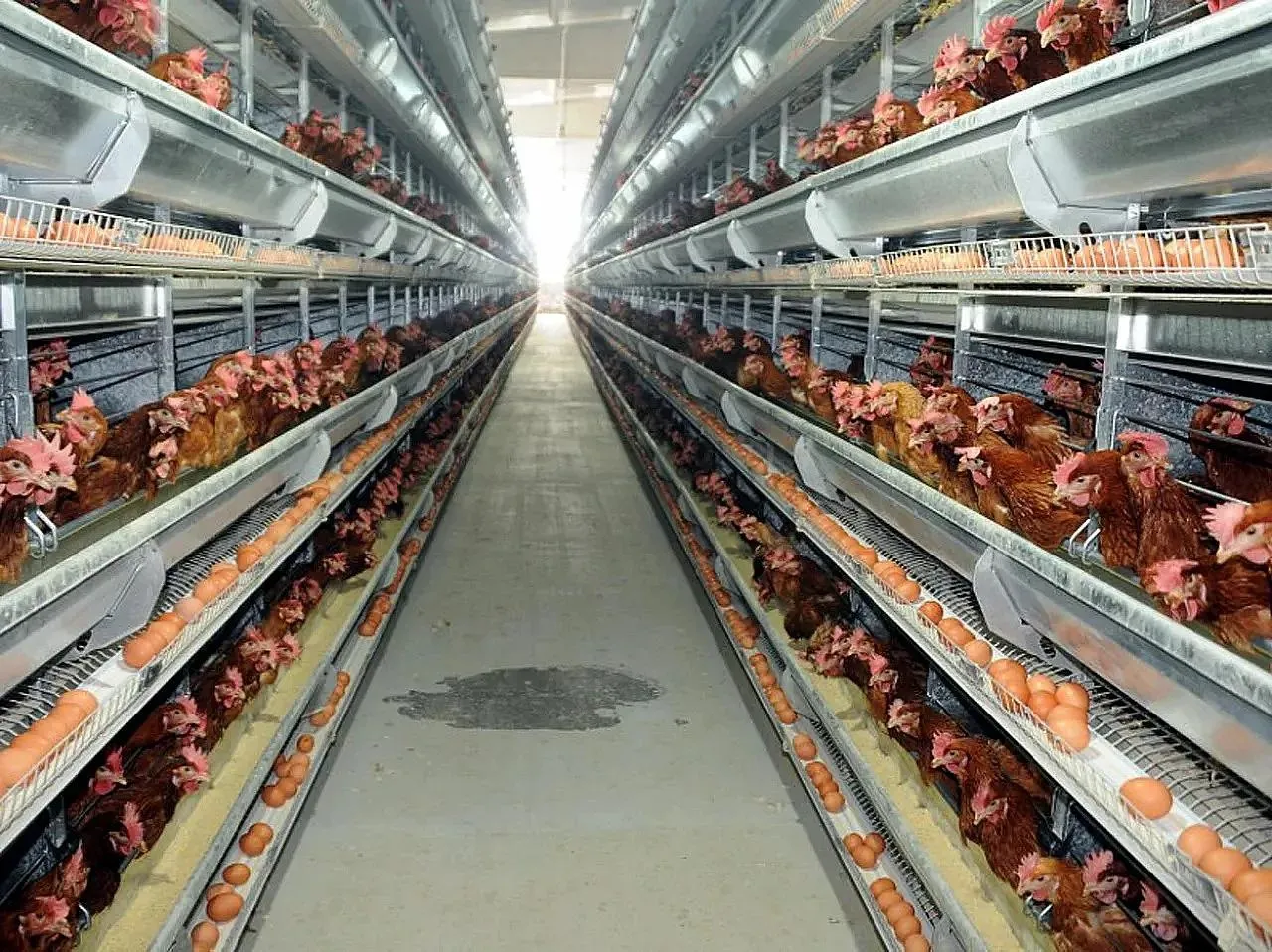
Laying hens in an egg production facility 01 / INDUSTRIAL EGG PRODUCTION
THE SCALE OF PRODUCTION

Endless Production, Enormous Demand

Eggs are produced on an enormous industrial scale to meet global demand. Hens have been selectively bred to lay far more eggs than their wild ancestors, placing considerable demands on their bodies.

Their natural reproductive cycles have been transformed into continuous commercial production, with little consideration for the physical toll of producing an egg almost every day. The industry treats their ability to lay eggs as a measure of their economic value.

Their bodies are valued for the eggs they produce.
Laying hens confined in an intensive farming system 02 / LIVING CONDITIONS
LIVES WITHOUT FREEDOM

Confined Lives, Restricted Freedom

Around the world, laying hens are kept in a variety of intensive systems, including enriched cages, barn systems and large indoor flocks. In conventional cage systems, hens have very limited space to move, stretch their wings, walk freely or interact naturally.

They are unable to perform many essential behaviours, such as exploring the ground, dust bathing and choosing suitable places to nest. Even in cage-free indoor systems, thousands of birds may live together in crowded buildings without access to the outdoors.

A life without freedom is no natural life at all.
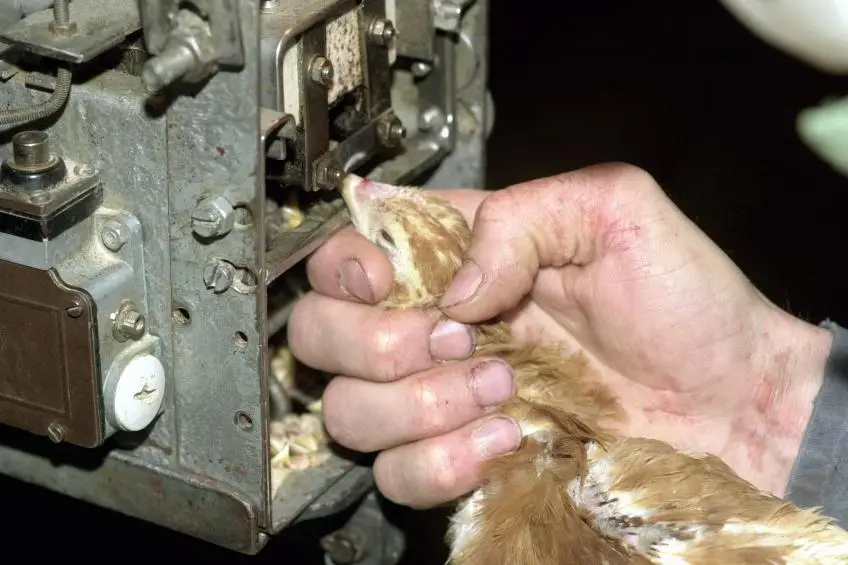
Hen in an intensive egg production environment 03 / PAINFUL PROCEDURES
ALTERING THEIR BODIES

Painful Procedures to Control Natural Behaviour

In intensive egg production, beak trimming is commonly used to reduce feather pecking and cannibalism among stressed and overcrowded birds. A portion of the beak is removed, often using infrared treatment or a hot blade.

However, a chicken's beak is a highly sensitive sensory organ containing nerve endings. The procedure can cause pain, tissue damage and lasting sensitivity.

Rather than addressing the conditions that contribute to harmful pecking, the industry often alters the birds themselves.

The birds are changed instead of the conditions that harm them.
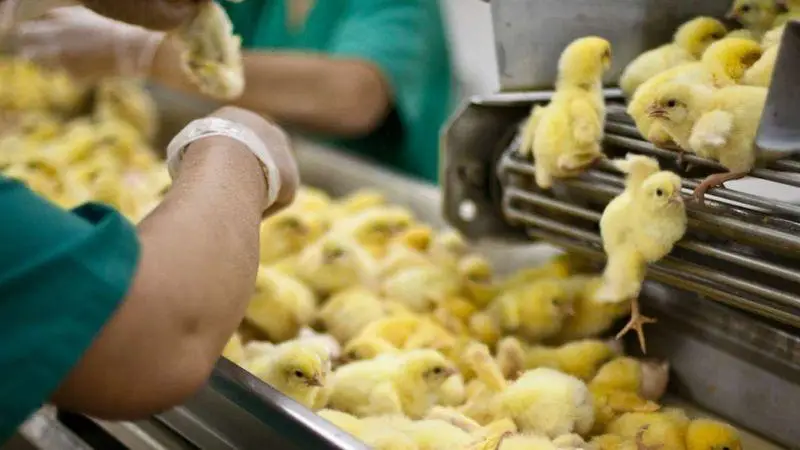
Newly hatched male chicks in the egg industry 04 / MALE CHICK CULLING
UNWANTED FROM BIRTH

Male Chicks: Unwanted from Birth

Male chicks born into the egg industry cannot lay eggs, and conventional laying breeds are not considered economically suitable for meat production. As a result, male chicks have traditionally been killed shortly after hatching, often within their first day of life.

Industrial methods include gas killing and maceration. Although alternatives such as determining the sex of embryos before hatching are being developed and introduced in some countries, the practice remains a serious welfare concern in many parts of the world.

For millions of male chicks, life ends almost as soon as it begins.
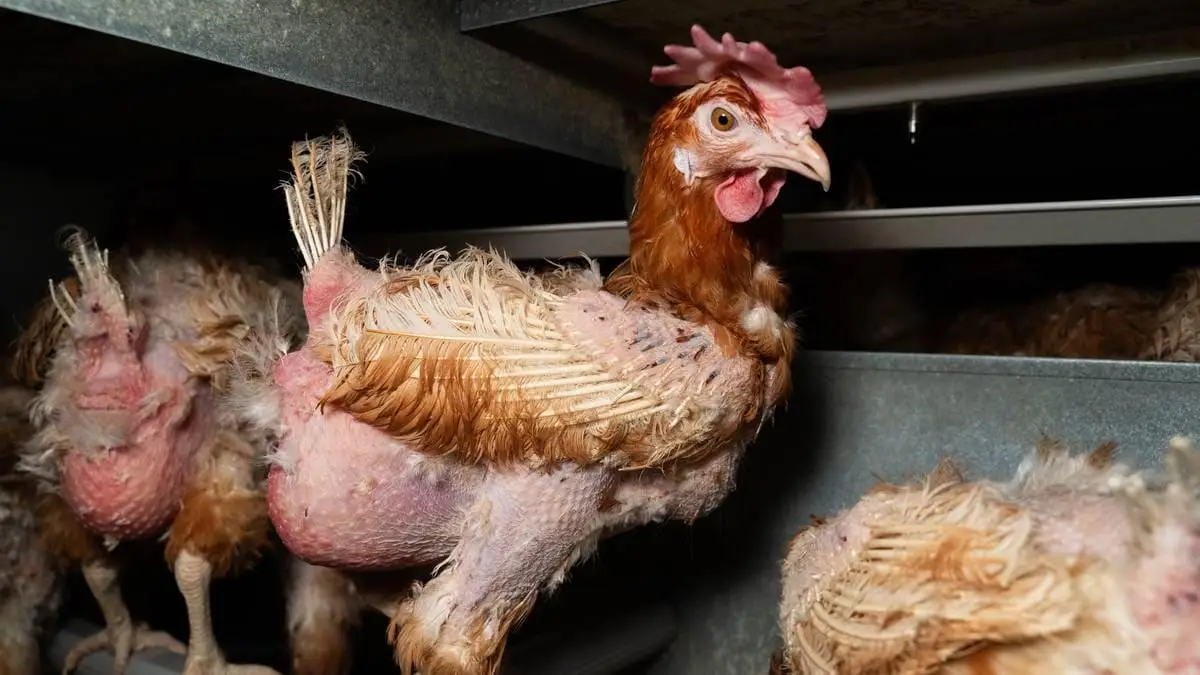
Laying hens at the end of their commercial production lives 05 / THE END OF PRODUCTION
WHEN THEY ARE NO LONGER PROFITABLE

Discarded When Egg Production Declines

Commercial laying hens are usually slaughtered when their egg production begins to decline, typically at around 18 months to two years of age. This is despite chickens having the potential to live for many years under suitable conditions.

After spending much of their lives producing eggs, these hens are considered commercially unproductive and are sent to slaughter.

Their bodies, exhausted by intensive production, are then used for lower-value meat products or other purposes.

When their productivity declines, their lives are cut short.
01 05

Slide 1 of 5

THE REALITY OF INDUSTRIAL FARMING

Chickens Used for Meat

The Hidden Reality Behind Meat Production
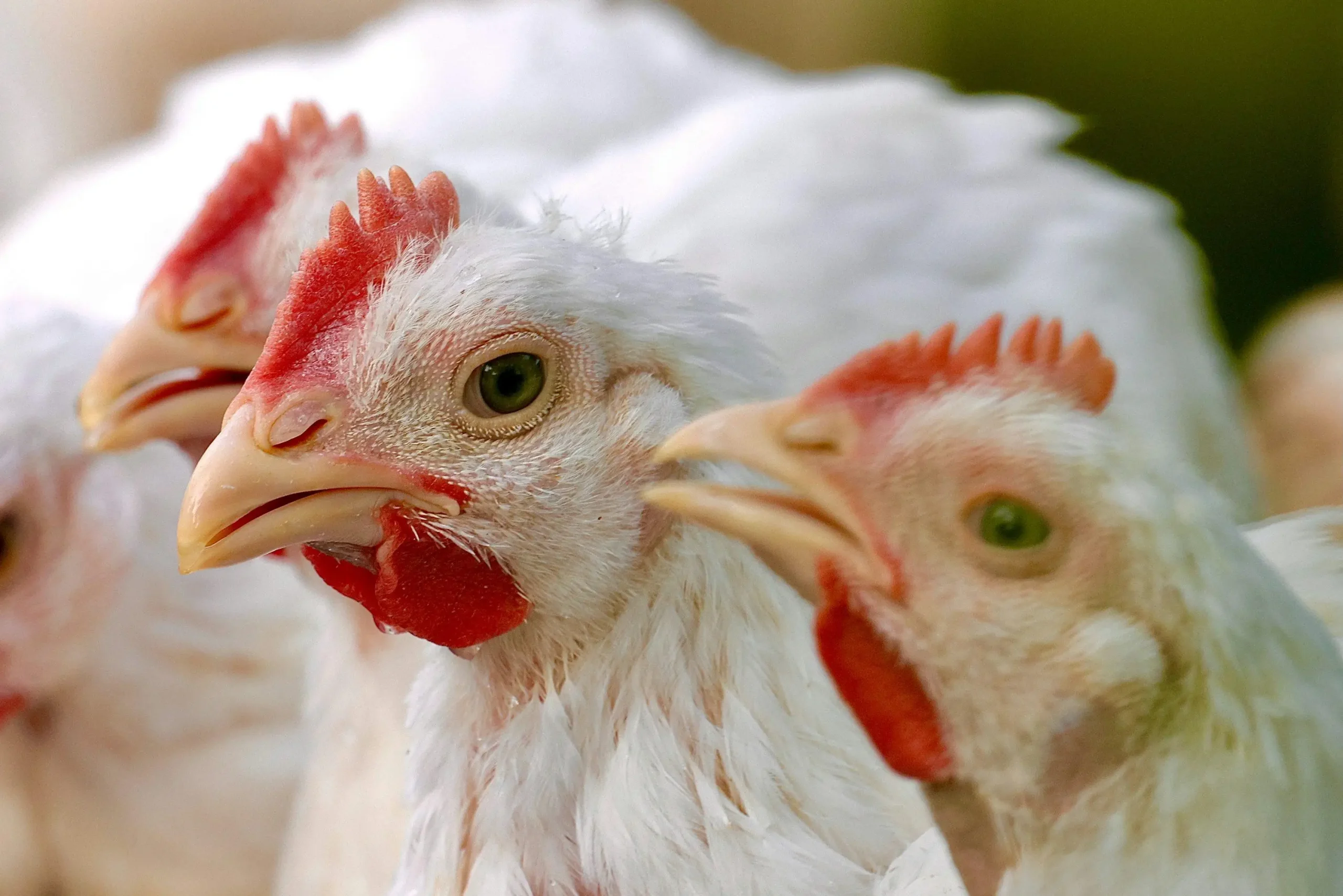
Broiler chickens raised for meat production 01 / INDUSTRIAL MEAT PRODUCTION
BRED FOR MAXIMUM PRODUCTION

Bred for Meat, Raised for Profit

Billions of chickens are raised and slaughtered for meat every year around the world, making them among the most intensively farmed animals on the planet. Known as broiler chickens, they have been selectively bred to grow rapidly and develop large bodies in a remarkably short time.

Commercial production prioritises rapid growth, feed efficiency and meat yield, often at the expense of the birds' health, comfort and natural needs.

Bred to grow faster, not to live better.
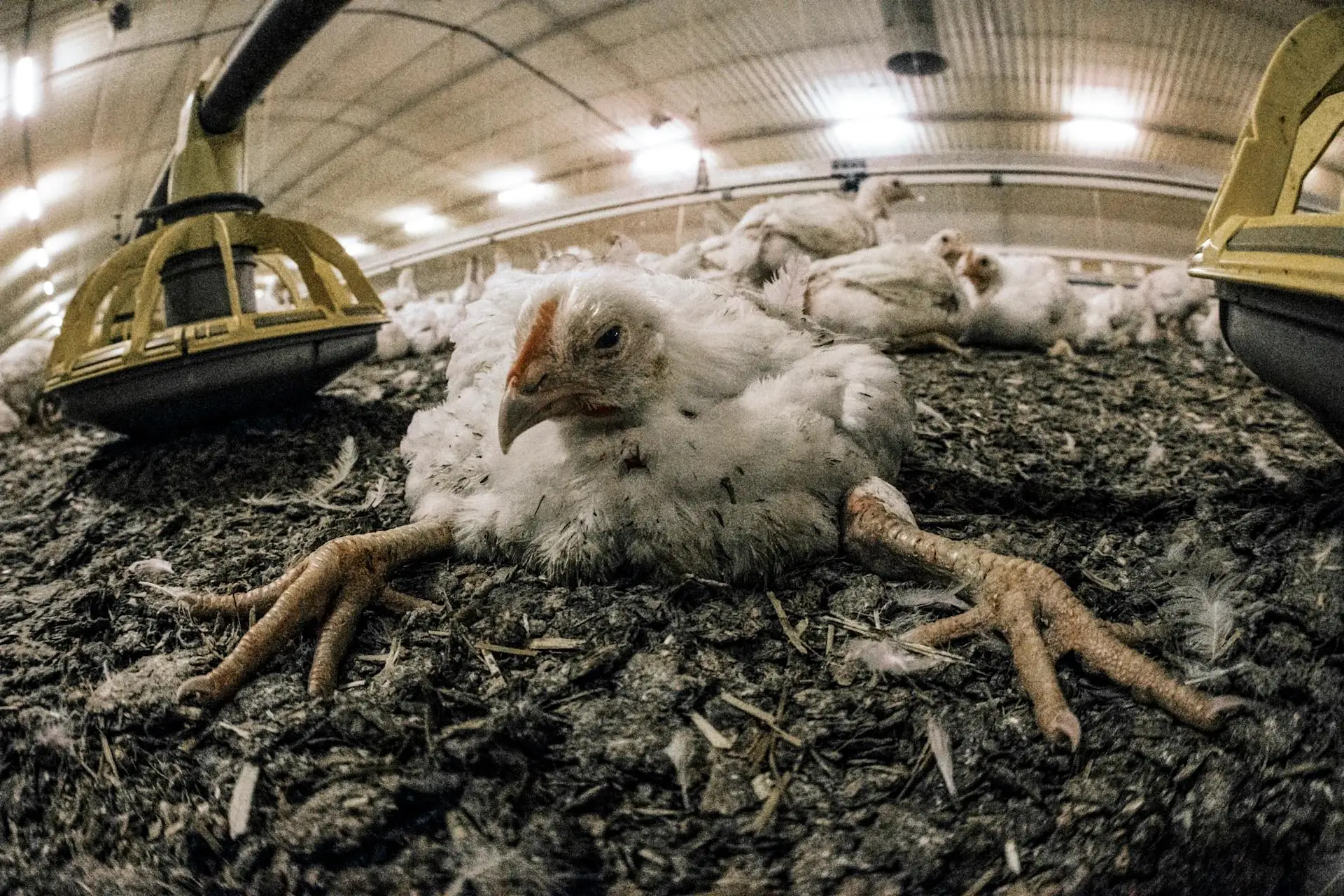
Fast-growing broiler chickens in an intensive farming system 02 / HEALTH & GROWTH
GROWING TOO FAST

Unnatural Growth, Serious Health Problems

Modern broiler chickens have been bred to gain weight at an extraordinary rate. Some reach slaughter weight in just five to six weeks, even though their bodies are still at an early stage of development.

Their rapid growth can place enormous strain on their legs, bones, hearts and lungs. Many suffer from lameness, difficulty walking, painful joint conditions and heart problems.

Some struggle to reach food and water or spend much of their lives sitting because standing and moving become increasingly difficult.

Their bodies grow faster than they can comfortably cope with.
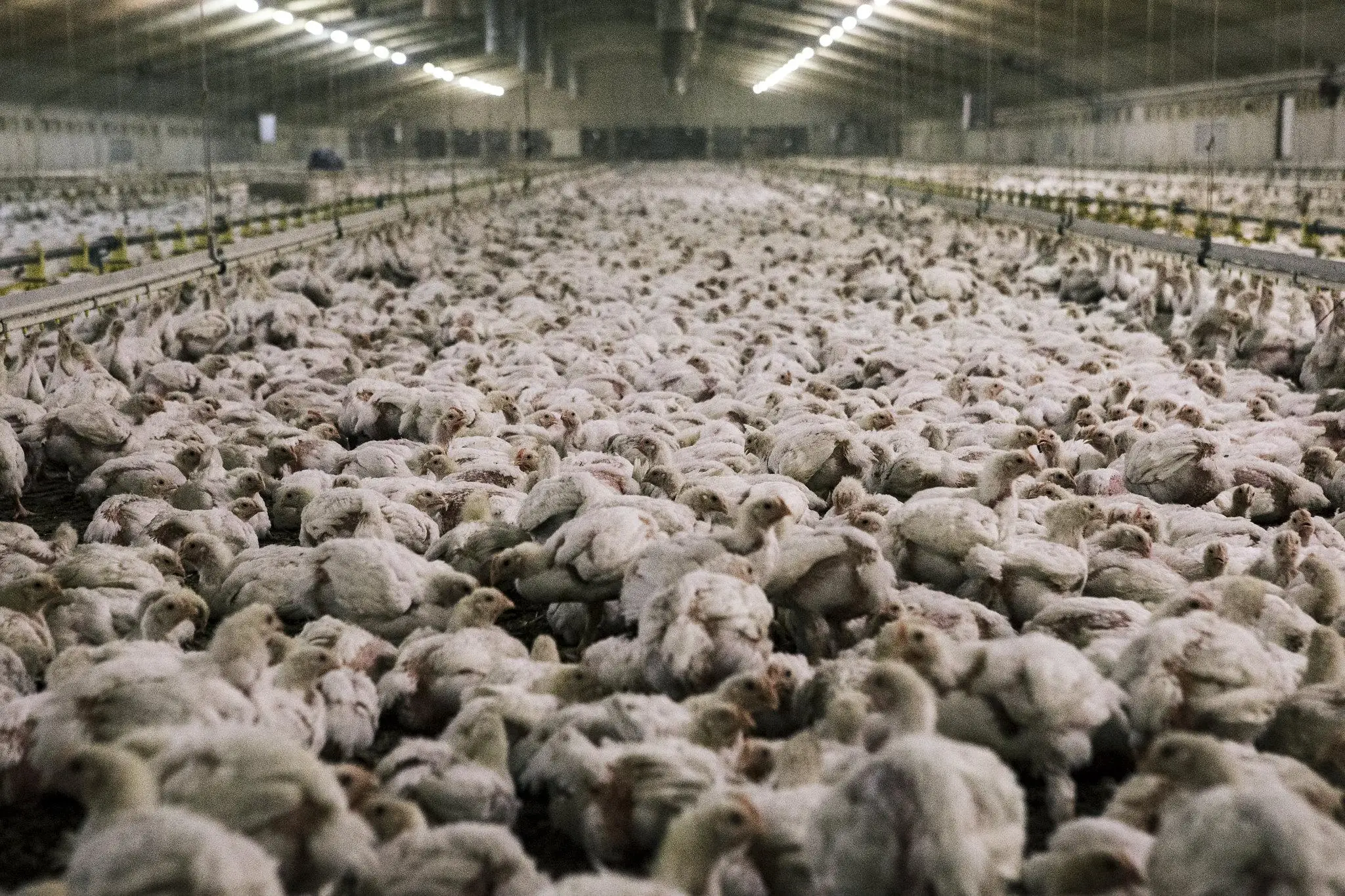
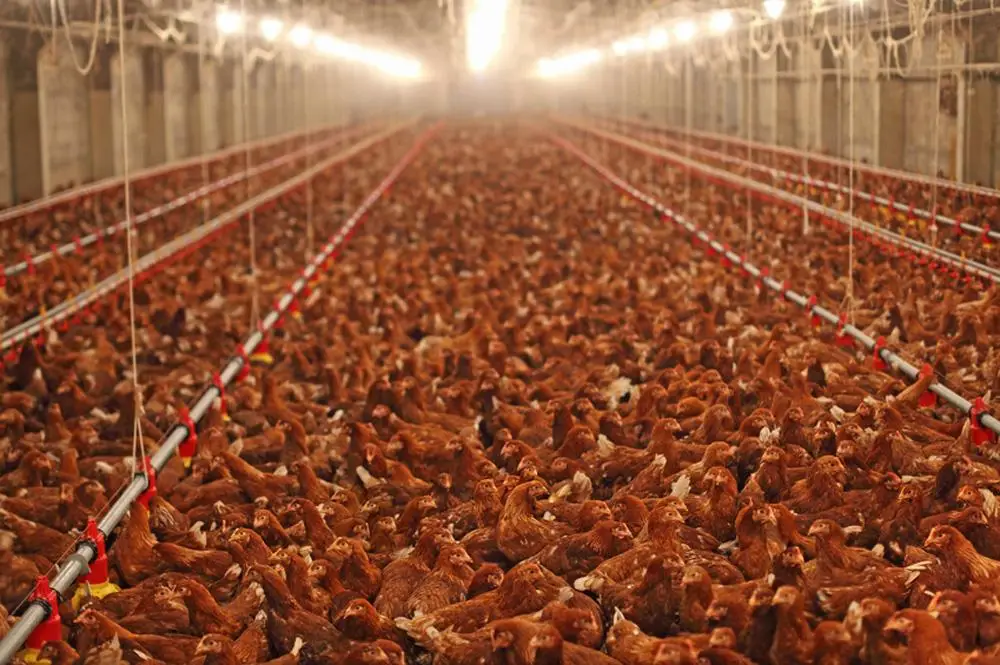
Meat chickens housed together in a crowded poultry shed 03 / LIVING CONDITIONS
LIVES WITHOUT FREEDOM

Crowded Buildings, Restricted Lives

Most commercially raised meat chickens spend their entire lives inside large industrial buildings, often alongside thousands of other birds. Although they are generally not kept in individual cages, the enormous number of chickens confined within these sheds leaves little room for natural movement.

Running, exploring, foraging and spreading their wings can become difficult. High stocking densities also increase the risk of injuries, stress, competition for resources and the spread of disease.

Thousands of birds, with little room to move freely.
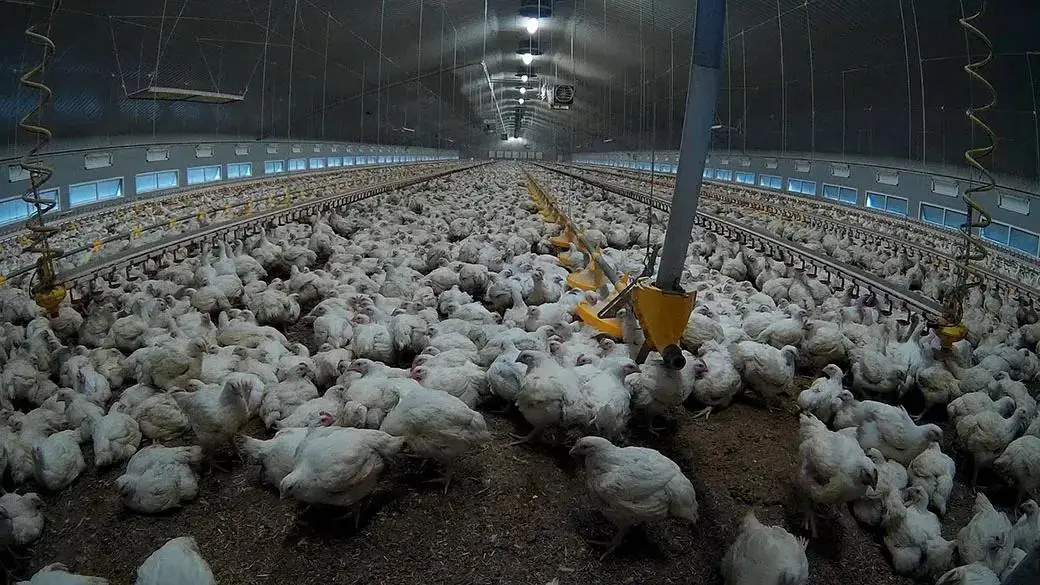
Chickens living in an intensive poultry house 04 / ENVIRONMENT & WELFARE
LIVING AMONG WASTE

Living Among Waste and Poor Air Quality

As thousands of chickens grow inside the same buildings, their droppings accumulate in the litter covering the floors. Moisture and decomposing waste can release ammonia, a gas that irritates the eyes and respiratory system.

Poor ventilation and unsuitable litter conditions can contribute to painful footpad lesions, breast blisters and respiratory problems.

Artificial lighting schedules and limited opportunities for natural behaviour can further disrupt their normal daily rhythms, leaving birds with little opportunity to experience a natural life.

Their living environment can become another source of suffering.
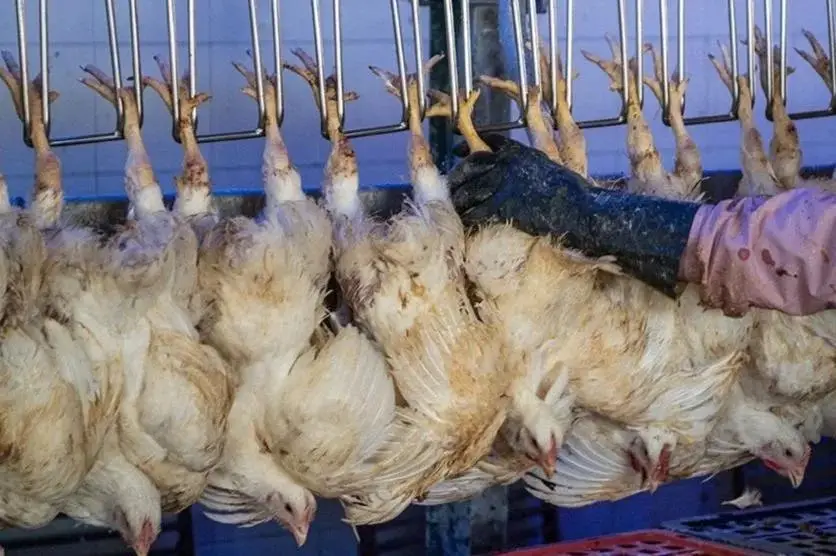
Broiler chickens raised for slaughter at a young age 05 / SLAUGHTER
A LIFE CUT SHORT

Slaughtered While Still Young

Most fast-growing broiler chickens are slaughtered at around five to six weeks of age, before they have reached physical maturity. In the UK, approximately 1.1 billion meat chickens were slaughtered in 2025, with many reaching slaughter at around 35 days old.

Before slaughter, birds are typically caught, transported and handled in large numbers. At the slaughterhouse, they are commonly stunned before their throats are cut, but ineffective stunning can leave some birds conscious during subsequent stages.

Their short lives end before they have had the opportunity to experience much of what makes a chicken's life worth living.

A life that could have lasted years ends in just a few weeks.
01 05

Slide 1 of 5

How Chickens Are Killed 

Among the Most Abused Animals on Earth

From the moment they hatch until the day they are slaughtered, chickens raised on factory farms endure painful procedures, severe confinement and the denial of their most basic natural behaviours. Deprived of the freedom to explore, socialise and live as they naturally would, they are denied the chance to experience life as the intelligent, active and sentient individuals they are.

United Kingdom

1.13 billion

meat chickens were slaughtered in the United Kingdom in 2025.

Global

75 billion

chickens are slaughtered worldwide annually.

Every year, billions of chickens are killed for human consumption, including more than one billion meat chickens in the UK alone. For broiler chickens, slaughter typically takes place when they are just five to six weeks old, while egg-laying hens are usually killed when their egg production begins to decline, at around 18 months to two years of age. Despite their very different lives, both are treated as part of an industrial process in which speed, efficiency and profit often take priority over their welfare.

Before slaughter, chickens must be removed from the sheds and prepared for transport. Workers catch them in large numbers, often by their legs, and place them into transport crates. This process can cause fear, stress and physical injuries, particularly when birds are handled quickly. The crates are then loaded onto trucks and transported to slaughterhouses, where chickens may experience further distress from overcrowding, temperature extremes, noise and prolonged confinement. They can remain without food for several hours before slaughter, adding to the stress of an already difficult journey. 

At the slaughterhouse, chickens are typically killed using either controlled-atmosphere stunning or electrical waterbath stunning followed by throat cutting. In controlled-atmosphere systems, birds are exposed to a mixture of gases intended to render them unconscious before death. However, exposure to certain gases, particularly high concentrations of carbon dioxide, can cause distress, gasping and violent head movements before consciousness is lost. In electrical waterbath systems, birds are hung upside down by their legs on a moving line before their heads pass through electrified water. Their throats are then cut, and they are expected to bleed to death. If stunning or cutting is ineffective, some birds may remain conscious during subsequent stages.

What Happens to Egg-Laying Hens?

When egg production declines, hens are considered commercially unproductive and are sent to slaughter, despite being capable of living for many more years. At the slaughterhouse, they are generally killed using gas-stunning systems, in which birds are exposed to a mixture of gases until they lose consciousness and die. Carbon dioxide can cause severe respiratory distress, escape attempts and vigorous head movements as birds struggle to breathe. A small proportion of spent hens may also be slaughtered without prior stunning, meaning their throats are cut while they are still conscious.

The egg industry also has a separate and often overlooked practice: the killing of newly hatched male chicks. Because they cannot lay eggs and are not considered suitable for profitable meat production, male chicks from conventional laying breeds are routinely killed shortly after hatching. In the UK, this has traditionally been carried out using gas mixtures, commonly involving argon, which reduce the oxygen available to the chicks. Maceration, a method involving rapidly rotating blades, is also used in some countries, although the UK industry states that it is no longer routinely practised. Technologies that identify the sex of embryos before hatching are beginning to offer alternatives, but their adoption remains limited.

Whether raised for meat, kept for eggs or born male in the egg industry, chickens are ultimately treated as products within a system designed around commercial value. Meat chickens are killed before they have had the opportunity to reach adulthood, laying hens are slaughtered once their productivity declines, and male chicks may be killed within hours of hatching. Behind the scale and efficiency of industrial poultry production are individual animals capable of feeling pain, fear and distress, each with their own instincts and needs. Their lives deserve to be valued for more than the products they can provide.

Two Different Realities

Two Very Different Lives

The same intelligent, social and sentient bird. Two profoundly different realities. Discover the contrast between a chicken's natural life and the conditions experienced by chickens raised for meat and egg production.

A Natural Life

Freedom to Be a Chicken

Roaming freely, scratching the earth, searching for food, taking dust baths, forming social bonds and raising their chicks in a safe and natural environment.

Freedom. Connection. Natural Instincts.

Factory Farming

A Life of Production

Overcrowded sheds, restricted movement, unnatural growth, intensive egg production and the denial of their most basic natural behaviours.

Confinement. Control. Exploitation.

Watch the Documentary

Behind Closed Doors...

Further Reading

Factory Farming

The system behind most of the world's meat

Animal Testing

The use of animals in product safety testing

Fish & Aquaculture

The unseen world of aquatic animal farming

Why Go Vegan?

Explore the ethical, environmental, and health reasons for choosing a vegan lifestyle.

How to Go Vegan?

A practical, step-by-step guide to making the transition to a healthy vegan diet.

How to Stay Vegan?

Practical strategies and tips to make vegan living enjoyable, balanced, and sustainable long-term.