


Factory Farming Overview
“The way we treat animals is a reflection of our society — and factory farming tells a story we should be ashamed to read.”
Factory Farming:
What It Is and
Why It's a Problem
Most people never see where their meat, eggs, and dairy come from. This overview pulls back the curtain with verified facts and explains the changes we can no longer afford to delay.
What Is Factory Farming?
Factory farming, also known as concentrated animal feeding operations (CAFOs), is a modern industrial method of rearing animals — collectively referred to as livestock — with the primary aim of maximising production and minimising costs. This highly intensive system treats animals as production units rather than living beings, prioritising profit above welfare, sustainability, or ethics.
In factory farms, vast numbers of animals such as cows, pigs, chickens, and fish are confined in overcrowded, enclosed spaces where they spend their entire lives deprived of sunlight, fresh air, and natural behaviours. Conditions are often unhygienic, with little to no environmental enrichment, leading to immense physical and psychological suffering. In some cases, factory farming is not limited to food production — animals such as minks are also farmed intensively for their fur, enduring similar confinement and neglect.
Over the past century, animal agriculture has transformed from small, family-run farms into a vast, industrialised system driven by speed and efficiency. Animals that once grazed freely in open fields are now packed by the thousands — sometimes millions — into large metal sheds, condemned to a life of confinement. Selective breeding for maximum yield has created animals with oversized bodies and unnatural growth rates, often leaving them struggling to walk or even stand. To keep them alive in such conditions, factory farms rely heavily on antibiotics, increasing the global threat of drug-resistant “superbugs.”
Every year, over 100 billion animals worldwide are slaughtered for meat, dairy, and other animal products. Beyond the unimaginable scale of suffering, factory farming also devastates the environment — contributing to deforestation, water and air pollution, greenhouse gas emissions, and the loss of biodiversity. Moreover, the overcrowded and unsanitary conditions of industrial farms pose a serious pandemic risk, providing ideal breeding grounds for infectious diseases.
factory farming has become a global crisis — one that affects not only animals but also the health of our planet and humanity itself.
The result is a system where animals are managed less as individuals and more as units of production — measured by feed conversion, weight gain, egg count and litres of milk per animal, per square metre, per dollar.

A Brief History of Factory Farming
Factory farming did not emerge at a single moment. It developed gradually as advances in agriculture, breeding, transport and technology transformed animal production. During the 20th century, farms became larger and more specialised, while intensive breeding, automated systems and controlled housing accelerated the shift towards industrial-scale farming.
Early Industrialisation
Advances in agriculture, transport and food processing began moving animal production towards larger and more commercially organised operations.
Large-Scale Production
Poultry and livestock production became increasingly specialised, with larger facilities and more standardised methods of raising animals.
Rapid Intensification
After the Second World War, animal agriculture intensified as producers adopted specialised housing, improved feeding systems and new technologies.
Breeding, Antibiotics & Automation
Selective breeding, antibiotics, mechanisation and controlled environments increased production and transformed intensive farming.
A Global Industrial Food System
Modern animal agriculture operates through interconnected systems of breeding, feed production, farming, processing, transport and global distribution.
Who Is Inside the System?
Eight species carry almost the entire weight of industrial animal agriculture. Although farming methods differ between species, the underlying pattern is often similar. Animals are bred for production, kept in controlled environments, moved through a series of production stages and eventually killed when they are no longer considered economically useful. Their lives are measured in growth rates, egg numbers, milk yields, feed conversion and production costs.

Chickens
Bred for meat or eggs, chickens are among the most numerous animals in industrial farming. Intensive systems can severely restrict movement and natural behaviours.

Pigs
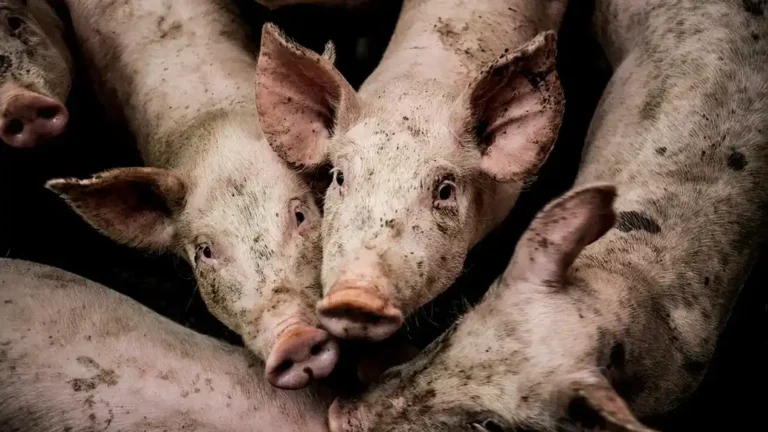
Pigs are intelligent and social animals with strong instincts to explore and forage. Intensive farming can confine them in barren and restrictive environments.

Cattle
Cattle are raised mainly for beef and dairy. Dairy cows are repeatedly bred for milk production, while their calves are commonly separated from them soon after birth.

Sheep
Sheep are social grazing animals raised mainly for meat and wool. Their lives can involve intensive handling, transport and painful procedures such as tail docking.

Goats
Goats are naturally active, curious animals that like to browse and explore. Farming systems can instead place their lives around breeding, production and slaughter.

Turkeys
Turkeys bred for meat have been selectively bred for rapid growth and large body size. This can contribute to serious problems with their legs, joints and movement.

Ducks
Ducks are raised mainly for meat and eggs. Intensive systems can restrict behaviours such as swimming, foraging and exploring their surroundings.

Farmed Fish
Fish farming raises huge numbers of animals in tanks, ponds and cages. High stocking densities and controlled environments can greatly limit their ability to behave naturally.
Chickens killed for meat each year
Pigs slaughtered each year
Wild fish are caught in enormous numbers every year, with estimates reaching into the trillions. These figures do not include the many other aquatic animals killed as bycatch.
The Life of a Factory-Farmed Animal
Six stages define most lives inside the system.
Follow them in order.

Birth
Born into the system
For many farmed animals, life begins as part of a production system designed around efficiency and output. Breeding may be selective or assisted, and mothers and their young are often separated within hours or days of birth. In the egg industry, male chicks, who cannot lay eggs, are commonly killed shortly after hatching because they have little economic value to the industry. Calves born to dairy cows are usually separated from their mothers, while piglets, chicks and lambs are moved into intensive rearing systems soon after birth.
Confinement
Life without freedom
As they grow, many animals spend much of their lives in cages, crates, stalls, crowded sheds or feedlots. These environments are designed primarily to house large numbers of animals efficiently, rather than to allow them to behave naturally. Depending on the species and country, animals may be kept in battery cages, gestation crates, farrowing crates, veal crates or densely stocked feedlots. The exact conditions vary, but restricted movement and limited opportunities for natural behaviour are common features of intensive farming.
Growth
Designed for production
Selective breeding and intensive feeding have been used to increase growth rates, milk production and egg laying. Chickens may be bred to reach slaughter weight in a short period, dairy cows can be selected for very high milk yields, and laying hens may produce eggs at a rate far beyond their natural reproductive cycle. These demands can place considerable strain on the animals' bodies, contributing to problems such as skeletal disorders, lameness, injuries and metabolic disease.
Handling
Routine procedures
Certain procedures are routinely carried out on farmed animals to manage the problems that can arise in intensive conditions. These may include beak trimming, tail docking, teeth clipping, castration and dehorning. Some procedures are performed with little or no pain relief, depending on the species, practice and local regulations. In many cases, they are intended to reduce injuries, aggression or other problems associated with keeping animals in crowded or restrictive environments.
Transportation
The journey
At some point, most farmed animals are transported. They may be loaded onto trucks, ships or trains and taken to another farm, a feedlot, a finishing facility or a slaughterhouse. During transport, animals can experience crowding, unfamiliar surroundings, handling and exposure to heat, cold or other difficult weather conditions. Some journeys also involve crossing regional or national borders. For animals sent to slaughter, transportation is often the final stage of their lives.
Slaughter
The final step
The final stage is slaughter. Animals are unloaded at the slaughterhouse and may be held in a waiting area before being moved for stunning and bleeding. Stunning is intended to render an animal unconscious before slaughter, reducing the possibility of pain during the killing process. However, when stunning is ineffective or fails, animals may remain conscious during subsequent stages. The way slaughter is carried out, as well as the level of monitoring and enforcement, varies between countries and individual facilities.
Procedures Performed on Factory-Farmed Animals
To make it possible to keep animals in crowded, stressful and often unsanitary conditions, a range of painful physical procedures are routinely carried out. These may include dehorning cattle, trimming or removing part of chickens’ beaks, and docking the tails of sheep, pigs and cattle raised in intensive systems. Although these procedures can cause significant pain and distress, pain relief is not consistently provided and, in many cases, is limited or absent.
Disbudding/Dehorning
Cattle and goats that naturally grow horns are often subjected to disbudding or dehorning at a young age to prevent horns from developing. Disbudding involves destroying the tissue that produces the horn, usually with a hot iron or caustic paste, while dehorning older animals can involve cutting through horn tissue and bone, sometimes extending into the frontal sinus. Although disbudding is generally considered less invasive than dehorning, it is still a painful procedure and can cause pain and discomfort that persist well beyond the initial treatment. These procedures are commonly carried out to reduce injuries between animals, protect farm workers and minimise bruising during handling and transport. Some farmers avoid them altogether by raising naturally hornless, or polled, cattle and goats.
Castration
In intensive animal farming, male cattle, goats, sheep and pigs that are not kept for breeding are often castrated. Depending on the species and age of the animal, this may involve surgically removing the testicles, crushing the blood vessels supplying them, or placing a tight rubber ring around them to cut off their blood supply. All of these methods cause pain, although the intensity and duration can vary. Surgical castration and crushing can cause severe pain during the procedure, while banding often causes increasing pain over the following hours and days, which may continue for weeks. Castration is carried out for several reasons, including reducing aggression, preventing unwanted breeding and altering growth or meat characteristics. In pigs, it has traditionally been used mainly to prevent the unpleasant odour and flavour that can develop in the meat of sexually mature males.
Tail Docking
Tail docking is a painful procedure that has historically been carried out on pigs, sheep and cattle in some production systems. Depending on the species, the tail may be cut, cauterised or, in cattle and sheep, tightly banded to stop the blood supply, causing the affected tissue to die and eventually fall away. The reasons vary between species: sheep may be docked to reduce the risk of flystrike, while pigs are often docked to reduce tail biting, a behaviour linked to factors such as overcrowding, limited opportunities to forage and inadequate environmental conditions. In cattle, tail docking was once used in dairy farming in the belief that it improved hygiene during milking, although research has found no clear benefit from the practice. Regardless of the reason, tail docking causes acute pain and may also lead to longer-term pain due to nerve damage and the formation of neuromas at the site of the injury.
Beak Trimming and Toe Amputation
Beak trimming, sometimes called de-beaking, is a procedure commonly carried out on laying hens, breeding chickens and turkeys to reduce feather pecking, aggressive pecking and cannibalism. Part of the beak may be removed using a heated blade or damaged with infrared treatment, causing the affected tissue to die and eventually fall away. The amount removed can vary, but it may involve a substantial portion of the beak, and the procedure can cause both immediate and longer-lasting pain. Turkeys and some breeding chickens may also undergo toe amputation, in which the tips of the forward-facing toes are removed or damaged, often when the birds are only a day old. This is intended to reduce injuries and scratching, but it involves deliberately damaging healthy tissue and can also cause pain.
Teeth Clipping and Grinding
Piglets are born with eight sharp, fully developed teeth, often known as needle teeth, which they use to compete for a teat and establish their place while nursing. Because these teeth can sometimes injure the mother’s udder or other piglets, some producers clip or grind them during the first days of life. The procedure can expose the sensitive, nerve-rich inner part of the tooth, causing immediate pain and potentially leading to longer-lasting discomfort. The risk of injuries may be greater in large litters, which have become more common as breeding programmes have focused on increasing the number of piglets born per litter.
Branding, Ear Notching and Ear Tagging
Branding is commonly used to identify cattle, particularly in the beef industry, and may be carried out using a heated iron or freezing. Both methods cause tissue damage and prolonged pain, although hot-iron branding is generally more painful and can cause severe burns. The resulting pain may continue for weeks or even months. Ear notching and ear tagging are also used to identify cattle, sheep, goats and pigs. Ear tagging involves piercing the ear to attach an identification tag, while ear notching involves cutting sections of the ear into a specific pattern. Although these procedures are intended for identification and record-keeping, they involve deliberately piercing, cutting or damaging living tissue.
The Life of a Mother
Inside Factory Farms
Our diets require land for crops eaten directly, crops grown as animal feed, and grazing. Animal agriculture can require more land because resources are used to feed animals before food reaches people.
Mother Pigs
Mother pigs naturally form strong bonds with their piglets and prepare nests before giving birth. In factory farms, sows can spend much of their lives confined in narrow crates, unable to turn around or care for their young freely. After a short period together, their piglets are taken away, and the mother is bred again, repeating the cycle until she is no longer considered productive.
Mother cows
Cows form strong maternal bonds and naturally care for and protect their calves. In the dairy industry, however, calves are commonly separated from their mothers soon after birth so that the milk can be collected for human consumption. The mother may call for her calf and search for it, but the separation is repeated with each new calf throughout her productive life.
Mother Chickens
Mother hens naturally prepare nests, protect their eggs and chicks, and guide their young after hatching. In intensive egg production, hens are bred to produce large numbers of eggs while often being kept in confined environments where they cannot express these maternal behaviours. Their chicks are rarely raised by them, and in the egg industry, male chicks are commonly killed shortly after hatching because they cannot lay eggs.
When Mothers and
Babies Are Separated
The bond between mothers and their young is not unique to humans. Cows, pigs, chickens, goats, ducks and many other animals show strong instincts to care for, protect and nurture their offspring. Yet on factory farms, these natural behaviours are often denied. Mother animals are not given the freedom to raise their young or form lasting bonds with them. Instead, they are treated primarily as breeding animals, valued for the offspring they produce rather than for the sentient beings they are.

How Animals
Are Killed?
Whether an animal is raised on a free-range, organic or pasture-based farm, its life ultimately ends at a slaughterhouse. Labels may describe how an animal was raised, but they do not change the final outcome: the animal is killed against its will. Many farmed animals are slaughtered at a very young age, and some are pregnant when they reach the slaughterhouse.
Stunning is intended to render animals unconscious before slaughter, but it does not always work as intended. Equipment failure, incorrect positioning, human error and inadequate training can all result in ineffective stunning. An animal that has not been properly stunned can remain conscious while physically unable to escape, able to see, hear and feel as the killing process continues and its throat is cut. The true scale of ineffective stunning is difficult to establish because reporting standards vary between countries and slaughter facilities, while incidents may also go unrecorded or underreported.
Reliable figures on ineffective stunning are difficult to establish, as incidents are not consistently recorded or reported across slaughter facilities. However, a Food Standards Agency survey of slaughter methods in England and Wales estimated that, in 2018, around 120 million poultry and 23,000 cattle were slaughtered without an effective stun. These figures highlight the scale of the problem and show that stunning does not always prevent animals from remaining conscious during slaughter.
How Many Animals Are Killed for Food?
Land animals
Aquatic animals
Why Is Factory Farming Bad?
Not one problem, but five connected ones.
Animal welfare
- Confinement and overcrowding
- Inability to express natural behaviours
- Injuries, disease and lameness
- Chronic stress and fear
- Painful routine procedures
- Separation of mothers and offspring
- Early slaughter
Animal Health
- Fast growth and production-related diseases
- Physical strain from intensive production
- Lameness and skeletal problems
- Injuries associated with high stocking densities
- Respiratory and infectious diseases
- Reliance on antibiotics to manage disease and production pressures
Environment
- Greenhouse gas emissions
- Extensive land and water use
- Pollution of soil, rivers and waterways
- Nutrient and manure pollution
- Habitat destruction and biodiversity loss
- High demand for animal feed
Public Health
- Antimicrobial resistance
- Risk of zoonotic disease emergence and spread
- Foodborne pathogens and contamination
- Intensive use of antibiotics
- Food safety challenges across large-scale supply chains
Ethics
- The capacity of animals to experience pain and suffering
- Suffering built into intensive production systems
- Treating living beings as units of production
- The separation of animals from their natural behaviours and social lives
- The moral status of animals and our responsibilities towards them
The Five Freedoms
Animal welfare philosophy and legislation are based on the Five Freedoms, which outline the essential conditions for an animal’s well-being:
- Freedom from hunger and thirst
- Freedom from discomfort
- Freedom from pain, injury and disease
- Freedom to express natural behaviour
- Freedom from fear and distress
Factory farming fundamentally conflicts with these five essential principles of animal welfare.
A Look Inside Today's Factory Farms
Why Does Factory Farming Persist?
Factory farming continues not simply because of consumer demand, but because economic incentives, infrastructure, policy and global food markets have developed around intensive animal production.
Economic and Structural Drivers
Factory farming is built around economies of scale. Producing large numbers of animals in standardised facilities allows farms and companies to spread infrastructure, equipment, labour and other operating costs across enormous volumes of meat, milk and eggs. Automated feeding, climate-controlled housing, specialised breeding and mechanised processing can further increase production efficiency.
The system also depends on standardisation. Animals are bred for particular production traits, fed according to controlled programmes and moved through highly organised production cycles. This makes production more predictable and allows large operations to supply processors and retailers with consistent quantities of animal products. These economic advantages can make intensive production difficult for smaller and more diversified farms to compete with, particularly in commodity markets where consumers and retailers are highly sensitive to price.
Corporate Consolidation
Factory farming does not operate at the farm level alone. Modern animal agriculture is connected to large networks involved in animal breeding, feed production, processing, packaging, distribution and retail. In some sectors and regions, ownership and market power have become concentrated among relatively few large companies. This concentration can influence how animals are produced, what farmers are paid, which production methods are economically viable and how products move through the supply chain.
Many farmers also operate within contract-based systems, producing animals according to specifications established by processors or integrators. These arrangements can provide access to markets and technical resources, but they can also limit farmers' control over important aspects of production. Corporate consolidation therefore helps explain why changing factory farming is more complicated than simply asking individual farms to adopt different practices.
Policy and Regulatory Frameworks
Agricultural systems do not develop independently of government policy. Farming and food production are influenced by agricultural subsidies, insurance programmes, environmental regulations, animal welfare standards, trade policies and rules governing processing and slaughter.
The exact effects differ considerably between countries and regions. Some policies can reduce financial risks for producers or support particular crops and forms of agricultural production, while regulations establish minimum requirements for animal welfare, environmental protection and food safety. Regulation can also determine how much information reaches the public. Rules concerning farm inspections, environmental reporting, slaughterhouse oversight and access to agricultural facilities vary between jurisdictions.
At the same time, agricultural regulation is not static. Animal welfare standards, environmental requirements and transparency rules can change in response to scientific evidence, public pressure, legal challenges and political decisions. Policy therefore has the potential both to reinforce existing systems and to drive changes within them.
Global Demand and Market Forces
The global demand for animal-derived foods is another important factor. Population growth, rising incomes, urbanisation and changing diets have contributed to increased demand for meat and other animal products in many parts of the world, although consumption patterns differ substantially between countries and regions. Industrial systems have expanded partly because they can produce large quantities of relatively standardised products for increasingly interconnected markets. Large farms, feed suppliers, processors, cold-storage facilities, transport networks and retailers have developed alongside this demand.
Once this infrastructure is established, changing the system becomes more difficult. A region that has invested heavily in livestock facilities may also have feed suppliers, processing plants, transport networks, specialised workers and supporting businesses built around animal agriculture. Replacing one part of the system therefore does not necessarily change the rest.
This creates a form of path dependence: decisions made over decades shape the choices available today. As long as demand, infrastructure, investment and supply chains continue to support intensive animal production, factory farming can persist even when alternatives are increasingly available.
What Can We Do About Factory Farming?
Ending factory farming requires action from governments, businesses, and individuals alike. Learning about factory farming can be difficult, but understanding the system is also the first step towards changing it. Change does not depend on a single action. It can happen through individual choices, consumer behaviour, social action and long-term changes to the food system.
Individual Choices
Everyday food choices can reduce reliance on animal agriculture and create greater demand for plant-based options.
- Eat more plant-based foods
- Replace animal products with plant-based alternatives
- Learn about balanced vegan nutrition
- Explore and support plant-based foods
Consumer Choices
Consumers influence what is produced through the products they choose to buy and the demand they create.
- Reduce consumption of animal products
- Read labels and understand production methods
- Learn how different farming systems affect animals
- Support businesses developing plant-based alternatives
Social Change
Individual choices become more powerful when combined with wider public awareness and collective action.
- Share reliable information
- Support animal protection organisations
- Encourage better animal welfare standards
- Advocate for changes in policy and industry practices
Long-Term Change
The future of food can move towards systems that place greater emphasis on plant-based production, innovation and animal welfare.
- Expand plant-based food systems
- Develop alternative proteins
- Strengthen animal welfare protections
- Reduce dependence on intensive animal agriculture


