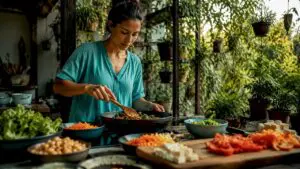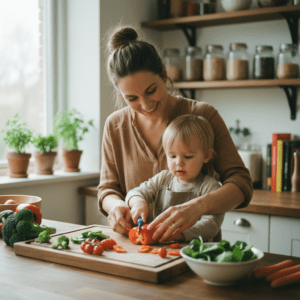

Cooking whole food plant-based meals means preparing dishes from unprocessed or minimally processed plant ingredients, including legumes, whole grains, vegetables, nuts, and seeds, to maximize both nutritional value and environmental benefit. This approach, formally known as a whole food plant-based (WFPB) diet, differs from general veganism because it specifically excludes refined oils, added sugars, and heavily processed vegan products. The health advantages are substantial: WFPB eating delivers high fiber, dense micronutrients, and protective phytochemicals in every meal. This guide gives you the practical tools to build flavor, manage prep time, and cook with confidence using real, whole ingredients.
What ingredients are essential for cooking whole food plant-based meals?
The foundation of WFPB cooking rests on a short list of whole plant staples that you can rotate endlessly. Stock these and you will never face an empty fridge with no options.
Core pantry staples:
- Legumes: lentils (red, green, black), chickpeas, black beans, cannellini beans, and edamame. with whole legumes like these delivers better nutrition at lower cost than packaged vegan meats. That single swap is the highest-leverage change you can make.
- Whole grains: brown rice, quinoa, farro, rolled oats, barley, and whole wheat pasta. These provide sustained energy and serve as the base for bowls, soups, and salads.
- Vegetables: prioritize fresh seasonal produce, but frozen spinach, peas, edamame, and corn are equally nutritious and far more convenient for weeknight cooking.
- Nuts and seeds: almonds, walnuts, cashews, sunflower seeds, pumpkin seeds, and flaxseed. Adding to a meal adds roughly 10 grams of protein without altering flavor. That makes hemp seeds one of the most efficient protein tools in a WFPB kitchen.
- Flavor builders: nutritional yeast (for umami and B12), tamari or low-sodium soy sauce, apple cider vinegar, tahini, miso paste, and tomato paste.
- Fresh aromatics: garlic, ginger, onion, shallots, and fresh herbs like cilantro, parsley, and basil.
Pro Tip: Buy dried legumes in bulk and store them in labeled glass jars. They last up to two years, cost a fraction of canned versions, and give you full control over sodium content.
Whole-food fats like avocado and a small amount of cold-pressed olive oil can support the absorption of fat-soluble vitamins A, D, E, and K. Use them with intention rather than as a default cooking medium.
How can home cooks efficiently batch-cook plant-based meals?
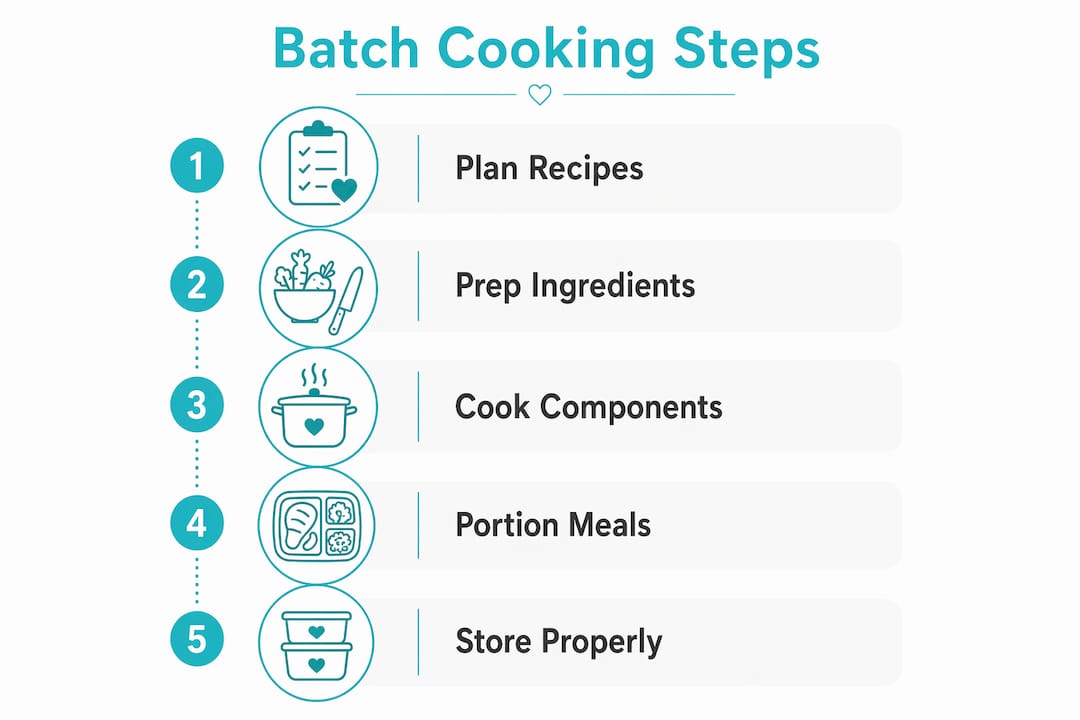
Batch cooking is the single most reliable strategy for sustaining a WFPB lifestyle without burning out. The goal is to cook components, not complete meals, so you can mix and match throughout the week.
Here is a practical weekly prep sequence:
- Cook a large pot of legumes. in a pressure cooker like an Instant Pot improves digestibility, cuts cooking time by 60 to 70 percent, and reduces sodium compared to canned options. Cook a full pound of lentils or chickpeas on Sunday and refrigerate in portions.
- Cook two whole grains simultaneously. Use one burner for brown rice and another for quinoa. Both keep well for five days in the fridge and freeze for up to three months.
- Roast a sheet pan of vegetables. Chop broccoli, sweet potato, zucchini, and red onion. Roast at 425°F for 25 to 30 minutes. These reheat in 90 seconds and work in bowls, wraps, or soups.
- Prepare two to three sauces. A tahini lemon dressing, a miso ginger glaze, and a simple tomato herb sauce stored in mason jars transform the same base ingredients into completely different meals each day.
- Portion and label everything. Use clear containers with date labels. Visibility prevents waste and removes the decision fatigue that leads to ordering takeout.
into 10, 15, 20, and 30-minute blocks helps home cooks build balanced WFPB dinners quickly on weeknights. That structure turns batch-cooked components into a flexible system rather than a rigid meal plan.
| Prep time | Meal example | Key components used |
|---|---|---|
| 10 minutes | Grain bowl with tahini drizzle | Pre-cooked grains, roasted veg, sauce |
| 15 minutes | Lentil soup from scratch | Red lentils, canned tomatoes, spices |
| 20 minutes | Chickpea stir-fry | Pre-cooked chickpeas, fresh veg, tamari |
| 30 minutes | Stuffed sweet potatoes | Baked potato, black beans, salsa, greens |
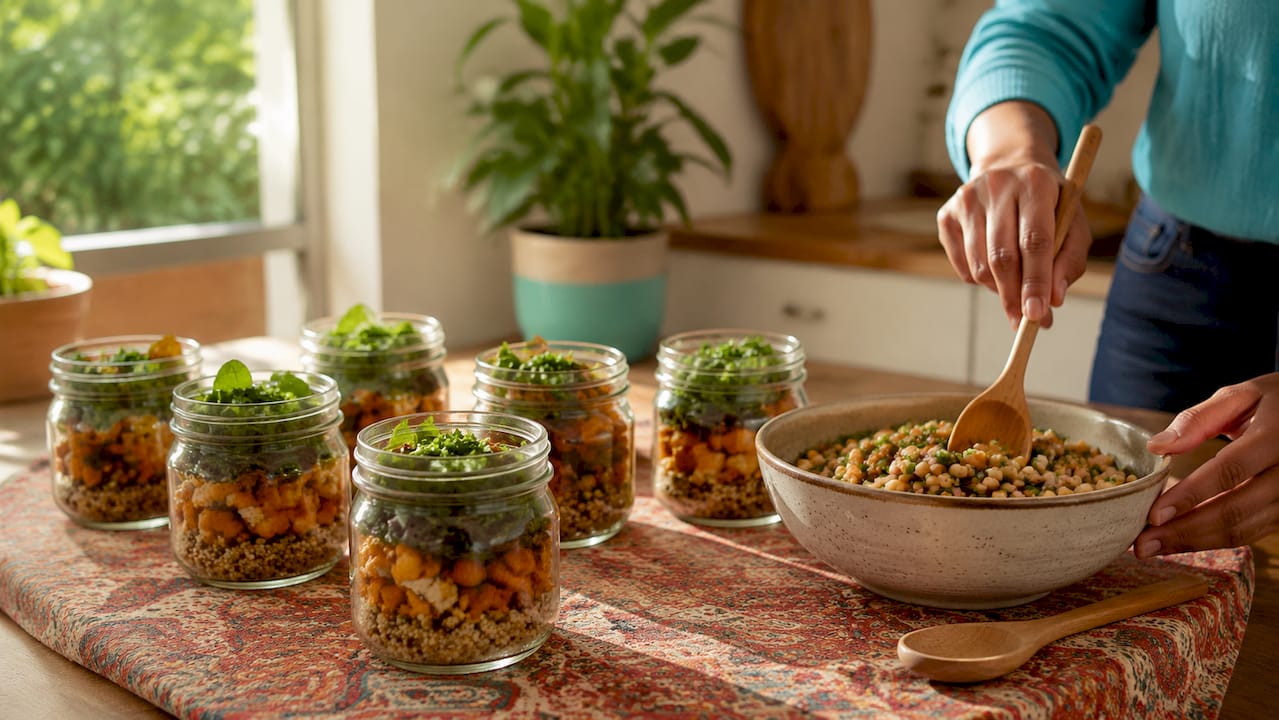
Pro Tip: Planning batch cooking around components rather than fixed recipes gives you flexibility to eat differently every day without cooking from scratch each time.
What cooking techniques build flavor without oil or processed ingredients?
This is where most home cooks struggle when they first shift to WFPB cooking. Without butter or oil as a default flavor carrier, you need to build depth through technique. The good news is that relies on strategic seasoning and texture layering, turning what feels like a limitation into a genuine creative advantage.
Core techniques to master:
- Sweat aromatics in broth or water. Add diced onion, garlic, and ginger to a hot pan with two to three tablespoons of vegetable broth. Stir frequently. The water evaporates and the sugars in the aromatics caramelize, producing the same sweetness you would get from sautéing in oil.
- Dry-roast at high heat. Patting vegetables completely dry before roasting is non-negotiable. Moisture is the enemy of browning. Roast at 400 to 425°F on a parchment-lined sheet pan without crowding. The Maillard reaction and browning occur without fat when you use dry heat and give ingredients space.
- Deglaze with broth or vinegar. After browning aromatics or vegetables in a pan, pour in a splash of vegetable broth or apple cider vinegar and scrape the bottom. That fond, the browned residue, contains concentrated flavor that would otherwise be wasted.
- Use acid at the end. A squeeze of lemon juice or a splash of red wine vinegar added in the final 30 seconds of cooking brightens the entire dish. Acid does not add flavor so much as it reveals the flavors already present.
- Build creamy textures without dairy. Blend cooked white beans or silken tofu into sauces for a rich, velvety consistency. Cashew cream made from soaked raw cashews and water creates a neutral base for everything from pasta sauce to salad dressing.
- Apply cornstarch for crispness. Toss cubed tofu or chickpeas in one tablespoon of cornstarch before air-frying or baking. The coating creates a crisp exterior that holds up in sauces and bowls.
“Cooking whole foods well combines ingredient respect, minimal processing, and simple chemistry for nutrient-rich, flavorful dishes.”
Carryover cooking is one of the most overlooked techniques in home kitchens. Remove vegetables from heat two to three minutes before they look fully done. Residual heat finishes the job and preserves both texture and heat-sensitive nutrients like vitamin C and folate.
Pro Tip: Steaming vegetables and then finishing them with a small amount of cold-pressed oil helps retain nutrients and supports . A teaspoon of olive oil over steamed broccoli is not a compromise. It is smart nutrition.
What are common challenges in plant-based cooking and how do you fix them?
Even experienced home cooks hit predictable walls when switching to WFPB cooking. Knowing the pitfalls in advance cuts the learning curve significantly.
- Bland flavor. The most common complaint. The fix is layering: season at every stage of cooking, not just at the end. Add spices to the pan with aromatics, add salt mid-cook, and finish with acid and fresh herbs. Each layer builds on the last.
- Mushy vegetables. Overcooking destroys both texture and nutrition. Use the carryover cooking principle: pull vegetables off heat early and let them rest. For stir-fries, cook on high heat for short bursts rather than low heat for long periods.
- Prep time overwhelm. Chopping every ingredient fresh each night is unsustainable. Dedicate 45 minutes on Sunday to washing, chopping, and storing vegetables in clear containers. A sharp chef’s knife and a mandoline slicer cut prep time in half.
- Nutritional gaps. with vitamin C sources significantly improves mineral absorption. Combine lentils with tomatoes, spinach with bell pepper, or black beans with salsa. This is not optional for long-term health on a WFPB diet.
- Meal fatigue. Eating the same grain bowl five days in a row breaks most people. Rotate your seasoning profiles weekly: one week focus on Mediterranean flavors (lemon, oregano, olives), the next on East Asian profiles (tamari, ginger, sesame), then Mexican (cumin, lime, chili). The base ingredients stay the same. The experience changes completely.
- Protein anxiety. Lentils deliver 18 grams of protein per cooked cup. Chickpeas deliver 15 grams. Edamame delivers 17 grams. Combine these with hemp seeds, pumpkin seeds, and whole grains and protein adequacy is straightforward. Athletes and active home cooks can explore plant-based performance nutrition for more specific guidance.
Pro Tip: When recipe fatigue hits, do not search for entirely new recipes. Change one sauce and one spice profile from your existing rotation. That single change creates a meal that feels new without adding prep complexity.
Key takeaways
Cooking whole food plant-based meals well requires mastering three things: a stocked pantry of whole plant staples, a batch-cooking system built around components rather than fixed recipes, and flavor-building techniques that replace oil with heat, acid, and layered seasoning.
| Point | Details |
|---|---|
| Legumes over processed alternatives | Whole lentils and chickpeas outperform packaged vegan meats on nutrition and cost. |
| Batch cook components, not meals | Pre-cooked grains, legumes, and roasted veg create flexible meals in under 10 minutes. |
| Build flavor through technique | Sweat aromatics in broth, deglaze pans, and finish with acid to replace oil-based depth. |
| Pair nutrients strategically | Combine iron-rich foods with vitamin C sources to maximize mineral absorption. |
| Rotate seasoning profiles | Changing spice and sauce profiles weekly prevents meal fatigue without extra prep. |
What I have learned from years of WFPB cooking at home
The part nobody tells you about WFPB cooking is that the first two weeks feel like a constraint and everything after that feels like freedom. Once you stop reaching for butter or a jar of processed sauce as a reflex, you start actually tasting your food. Lentils cooked with cumin, smoked paprika, and a finishing squeeze of lemon are genuinely satisfying. Not “satisfying for a vegan meal.” Just satisfying.
The tools that changed my cooking most were an Instant Pot for legumes and a high-speed blender like a Vitamix for sauces. Neither is mandatory, but both removed friction from the process. Friction is what kills good habits.
I also stopped trying to replicate meat-based dishes and started cooking to the strengths of plant ingredients. Roasted cauliflower does not taste like chicken. It tastes like roasted cauliflower, which is excellent on its own terms. That mental shift matters more than any recipe.
The environmental dimension reinforces the habit. Global health policy is increasingly aligning with plant-forward eating for exactly the reasons you already suspect: lower land use, lower water use, and dramatically reduced greenhouse gas emissions per calorie. Cooking this way is not a sacrifice. It is one of the most concrete things a single person can do.
Start with one batch-cook session this weekend. Cook a pot of lentils, roast a sheet pan of vegetables, and make a tahini dressing. That is enough to build three or four meals. The learning curve is real but short.
— Ali
Ready to go deeper with Huf?
Switching to whole food plant-based cooking is one of the most impactful decisions you can make for your health and the planet. Huf has built a library of evidence-backed resources to support every stage of that shift.
Whether you are just starting out or refining an existing plant-based practice, Huf’s complete vegan transition guide walks you through the lifestyle changes, nutritional considerations, and practical strategies that make the shift sustainable. For a deeper look at what this diet does for your body, the plant-based health benefits resource covers everything from heart health to cancer risk reduction with clear, research-backed explanations. The food on your plate connects directly to your long-term health outcomes. Huf gives you the evidence to act on that connection.
FAQ
What does “whole food plant-based” actually mean?
Whole food plant-based (WFPB) refers to a diet built on unprocessed or minimally processed plant foods, including vegetables, legumes, whole grains, fruits, nuts, and seeds, while excluding refined oils, added sugars, and heavily processed vegan products.
How do I get enough protein cooking plant-based meals?
Lentils, chickpeas, edamame, tofu, tempeh, and hemp seeds each deliver substantial protein per serving. One tablespoon of hemp seeds adds roughly 10 grams of protein to any meal without changing its flavor.
Can I cook flavorful WFPB meals without using oil?
Yes. Sweating aromatics in broth, dry-roasting at high heat, deglazing with vinegar, and finishing with acid all build deep flavor without added fat. The technique replaces the oil, not the flavor.
How long does plant-based meal prep actually take?
A focused 45 to 60-minute batch session on the weekend produces enough cooked grains, legumes, and roasted vegetables for four to five days of meals. Time-blocked meal prep organized by 10 to 30-minute windows makes weeknight assembly fast and low-effort.
Do I need to worry about nutrient deficiencies on a WFPB diet?
The main nutrients to monitor are vitamin B12, vitamin D, iodine, and omega-3 fatty acids. Pairing iron-rich foods with vitamin C sources addresses absorption. B12 supplementation is recommended for anyone eating fully plant-based long-term.
Recommended
- How to Go Vegan Step by Step: Your Practical Vegan Transition Guide – Going Vegan
- Vegan Lifestyle: Transitioning to a Vegan Lifestyle & Plant-Based Foods
- Being Vegan: A Complete Guide on How to be Vegan & Transition
- Plant-Based for the Planet: Environmental Pressure from Animal-Based Food Production