
Off the rugged, forested coast of British Columbia, the emerald waters of the Broughton Archipelago have long been a sanctuary for wild Pacific salmon. For millennia, these iconic fish have woven themselves into the ecological and cultural fabric of this place. But now, a silent, invisible threat drifts from the floating net-pens of industrial salmon farms, casting a shadow over the future of their wild cousins.
Key takeaways
- ⚠️ Pollution Plumes: Open net-pen fish farms release untreated waste, including feces, uneaten feed, and chemical treatments, directly into the surrounding waters, creating nutrient pollution that can lead to harmful algal blooms and dead zones.
- 🔬 Disease Amplifiers: The high density of fish in aquaculture pens creates a breeding ground for parasites and diseases, like sea lice and infectious salmon anemia (ISA), which can then spill over and infect struggling wild populations with devastating consequences.
- 📉 Genetic Dilution: Millions of farmed fish escape into the wild each year. These escapees, bred for rapid growth in captivity, can outcompete wild fish for resources and interbreed with them, weakening the genetic integrity and resilience of native species that have been adapted to their environment for millennia.
- 🐟 The Feed Dilemma: Many popular farmed fish, like salmon, are carnivorous. It can take several kilograms of wild-caught forage fish (like anchovies and sardines) to produce just one kilogram of farmed salmon, placing additional strain on wild ocean fisheries.
The Plume of Progress: Aquaculture's Waste Problem
The promise of aquaculture was simple: by farming fish, we could relieve the pressure on dwindling wild stocks while still meeting the world’s growing demand for seafood. The industry’s growth has been staggering. In 1990, global aquaculture production stood at 13 million tonnes; by 2022, it had swelled to over 90 million tonnes, accounting for more than half of all fish consumed by humans. But this rapid expansion, particularly in the form of open net-pen farms for species like salmon and sea bass, has come at a significant ecological cost that is rarely seen by the consumer.
An open net-pen is essentially a floating feedlot. Thousands, sometimes hundreds of thousands, of fish are packed into a submerged cage. And just like a terrestrial factory farm, they produce a tremendous amount of waste. Feces, urine, and uneaten feed, rich in nitrogen and phosphorus, flow unrestricted into the surrounding marine environment. A 2018 study estimated that a single large salmon farm can produce a volume of nitrogen and phosphorus waste equivalent to the untreated sewage of a town of up to 65,000 people. This hyper-concentration of nutrients, a process known as eutrophication, fuels explosive algal blooms. As these blooms die and decompose, they consume dissolved oxygen in the water, creating hypoxic "dead zones" where other marine life cannot survive.
Beyond just biological waste, a cocktail of chemicals is also used to manage these industrial operations. Antibiotics, pesticides, and antifouling agents are regularly deployed to control disease and keep nets clean. In the case of sea lice, a parasitic crustacean that thrives in crowded farm conditions, farmers use chemicals like slice (emamectin benzoate) and hydrogen peroxide. These treatments don't stay in the pens. They disperse into the water column, with largely unknown but worrying long-term effects on non-target species like shrimp, crabs, and plankton, the very foundation of the marine food web.
| 1990 | 13.4 Million tonnes | |
|---|---|---|
| 2000 | 32.4 Million tonnes | |
| 2010 | 59.9 Million tonnes | |
| 2020 | 87.5 Million tonnes | |
| 2022 | 90.5 Million tonnes |
Viral Outbreaks: When Farm Diseases Jump the Fence
Wild fish populations are naturally resilient, with genetic diversity forged over eons of evolution. But they are often no match for the intensified diseases and parasites that emerge from the stressful, crowded conditions of aquaculture.
Nowhere is this clearer than with the problem of sea lice (Lepeophtheirus salmonis). In the wild, these parasites exist in low numbers, but the densely packed salmon farms act as massive amplifiers. A single farm can produce trillions of larval lice that are then carried by tides and currents into the migratory paths of wild fish. Young wild salmon, known as smolts, are particularly vulnerable. Weighing only a few grams on their journey from river to sea, an infestation of just one or two lice can be a death sentence—either by feeding on them directly or by creating open sores that lead to secondary infections.
"The concentration of fish in open net-pens creates a perfect breeding ground for pathogens. These farms can become permanent reservoirs of disease that constantly infect the wild fish swimming past. It's a continuous, unnatural source of infection pressure." — Dr. Martin Krkosek, Associate Professor, University of Toronto
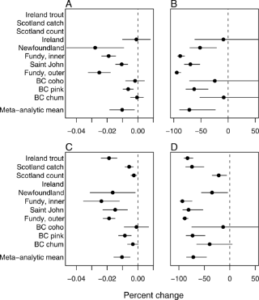
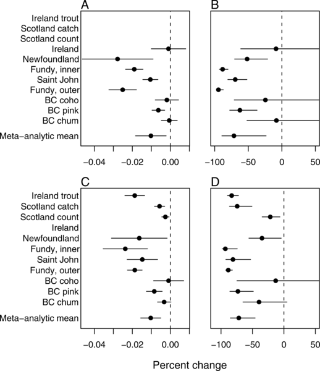
A landmark 2007 study published in Science directly linked sea lice from salmon farms in British Columbia to a more than 80% decline in local wild pink salmon populations. The evidence has only mounted since, with researchers documenting similar impacts in salmon-farming regions around the world, including Norway, Scotland, and Chile.
Other diseases also pose a threat. Infectious Salmon Anemia (ISA), a viral disease akin to influenza in fish, has been devastating for the aquaculture industry, leading to mass culls. When the virus inevitably escapes into the wild, its impact on native populations, which have no acquired immunity, is a significant concern for conservationists.

A Table of Transmitted Pathogens
The threat goes far beyond a single parasite. A variety of pathogens can be amplified in farm environments and spill over into wild ecosystems.
| Pathogen Type | Disease/Parasite | Primary Farmed Species | Key Threat to Wild Populations |
|---|---|---|---|
| Parasitic Crustacean | Sea Lice (Lepeophtheirus salmonis) | Atlantic Salmon | High mortality in juvenile wild salmon due to secondary infections. |
| Virus | Infectious Salmon Anemia (ISA) | Atlantic Salmon | Can cause severe anemia and mortality in related wild salmonids. |
| Virus | Piscine Orthoreovirus (PRV) | Atlantic Salmon | Associated with heart and skeletal muscle inflammation (HSMI). |
| Bacteria | Piscirickettsia salmonis (SRS) | Salmon, Trout | Causes lesions and septicemia, high risk in farmed & wild fish. |
| Myxozoan Parasite | Kudoa thyrsites | Various Marine Fish | Post-harvest flesh degradation, economic and ecological concerns. |
The Escapees: A Genetic Tsunami
Storms, equipment failure, human error, and hungry seals are all common realities of marine aquaculture. The result is that escapes are not a matter of if, but when—and how many. Every year, millions of farmed fish break free from their pens and enter the wild. In the North Atlantic region alone, it is estimated that over two million farmed salmon escape annually.
These are not the same fish that have navigated these waters for thousands of years. Farmed salmon, for example, have been selectively bred for traits that are beneficial in a cage: rapid growth, aggression, and tolerance to crowding. They are, in essence, domesticated animals. When they escape into the wild, they compete with their wild counterparts for food, habitat, and mates.
The very traits that make farmed fish successful in a cage—like voracious, aggressive feeding—can make them a menace in the wild.
The most insidious threat is genetic. When farmed escapees successfully interbreed with wild populations, they introduce genes that are poorly adapted for survival in the natural world. Research has shown that hybrid offspring have lower fitness and reduced lifetime reproductive success. One study published in PLOS Biology documented how just a few generations of interbreeding can lead to a "demographic collapse" in wild populations. This genetic dilution acts as a subtle, creeping extinction, eroding the resilience and local adaptations that allow wild salmon to navigate their specific home rivers and survive a perilous life at sea.
Farmed vs. Wild: An Unfair Competition
Escaped farmed fish are not just a genetic problem; they are a direct physical competitor. Their different life history and physical traits create an imbalance in the ecosystem.
| Trait | Farmed Atlantic Salmon (Escapee) | Wild Atlantic Salmon |
|---|---|---|
| Genetic Diversity | Low; selectively bred from a small founder stock. | High; adapted to specific river systems over millennia. |
| Growth Rate | Extremely rapid; bred to reach market size in 18-24 months. | Slower and more variable, timed with natural food availability. |
| Behavior | More aggressive, less cautious of predators. | Wary, with strong anti-predator instincts. |
| Spawning Timing | Often different and less precise than local wild populations. | Precisely timed to maximize offspring survival in a specific river. |
| Disease Resistance | Dependent on antibiotics; low resistance to novel pathogens. | Natural resistance to local diseases and parasites. |
The Great Fish Feed Dilemma
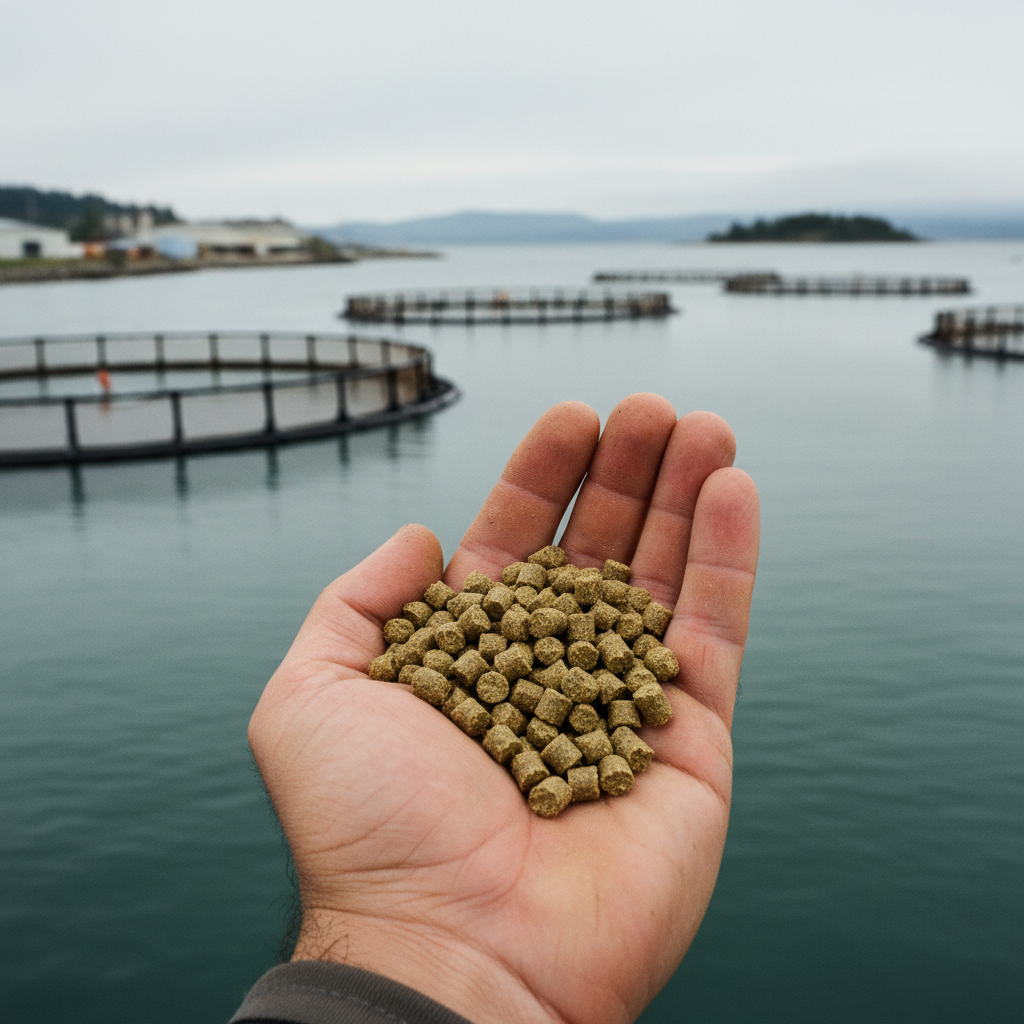
The issue extends beyond the immediate vicinity of the farms. A significant portion of industrial aquaculture, especially for carnivorous species like salmon, tuna, and shrimp, is dependent on a controversial ingredient: fishmeal and fish oil derived from wild-caught fish.
These "forage fish"—species like anchovies, sardines, and menhaden—form the crucial base of the marine food web, providing sustenance for everything from seabirds to whales to larger commercial fish like cod and tuna. Each year, roughly 20% of the entire global wild fish catch is rendered into feed for aquaculture. This creates a troubling paradox: we are catching wild fish to grow farmed fish.
This reliance has led to the over-exploitation of forage fish stocks in many parts of the world, particularly off the coasts of Peru and West Africa, with cascading effects on local food security and ecosystem stability. While the industry has made strides in recent years to reduce the "Fish In, Fish Out" (FIFO) ratio by substituting plant-based proteins and other alternatives, the sheer volume of farmed carnivorous fish being produced means the absolute demand for wild-caught feed remains immense. This global transfer of marine biomass—from the South Pacific to a salmon pen in Norway—is a hidden ecological subsidy propping up an industry that markets itself as a solution to overfishing.

By the numbers
Here are some of the key statistics that frame the scale of aquaculture's impact on wild ecosystems:
- 50%: The approximate share of seafood consumed by humans that comes from aquaculture, a share that is steadily rising. (FAO, 2024)
- 20%: The percentage of the world’s total wild fisheries catch that is used to produce fishmeal and fish oil, primarily for aquaculture feed. (FAO, 2024)
- >2,000,000: The estimated number of farmed salmon that escape into the North Atlantic each year. (Norwegian Institute for Nature Research)
- ~80%: The population decline of wild pink salmon observed in a British Columbia sound that was directly attributable to sea lice infestations originating from nearby salmon farms. (Science)
- 1 kg: The amount of wild fish that can be required to produce 1 kg of farmed carnivorous fish like salmon, although this ratio is improving. (Naylor, R. L., et al.)
Frequently Asked Questions
Isn't fish farming necessary to prevent overfishing and feed a growing population?
Aquaculture is undoubtedly a critical component of global food security. However, the issue is not whether to have aquaculture, but how it is practiced. Methods that rely on catching wild fish to feed farmed fish, or that pollute and spread disease to wild populations, can exacerbate rather than solve the problem of ocean conservation. Truly sustainable aquaculture should add to, not subtract from, the net global fish supply and protect the ecosystems in which it operates.
Are there more sustainable forms of aquaculture?
Yes. Farming species that are lower on the food chain is far more sustainable. Aquaculture of non-carnivorous fish (like tilapia and carp) and especially unfed aquaculture—such as for mussels, clams, oysters, and seaweed—can be ecologically beneficial. These species don't require wild-caught feed and can actually clean the water by filtering out excess nutrients, turning a potential pollutant into a valuable protein source.
Can't we just improve regulations on open net-pen farms?
Better regulation—such as requirements for lower stocking densities, stronger containment systems to prevent escapes, and mandatory fallowing periods to break disease cycles—can certainly reduce harm. Some jurisdictions are moving toward "closed-containment" systems, either on land or in floating tanks, which prevent waste and pathogens from entering the environment. While these systems currently have higher costs and energy footprints, they represent a promising technological pathway for producing carnivorous fish more responsibly.
What happens to the marine environment after a fish farm is removed?
The environment can recover, but it takes time. Studies have shown that the seafloor directly beneath a decommissioned salmon farm can remain biologically impoverished for years due to the accumulation of waste. However, once the constant source of pollution and pathogens is removed, water quality improves and wild species can begin to rebound, especially if the underlying habitat has not been permanently altered.
As a consumer, what can I do?
Choosing seafood wisely is a powerful first step. Look for certifications like the Aquaculture Stewardship Council (ASC), but also be critical and do your own research. Prioritize shellfish like mussels and oysters, as well as seaweed. When buying finfish, consider species that are not carnivorous, such as U.S. farmed tilapia or catfish. Reducing consumption of farmed carnivorous fish like salmon and shrimp, or choosing those from land-based closed-containment systems, can significantly reduce your personal ecological footprint.
The Path to a Bluer Future
The silent crisis unfolding beneath the waves is one of our own making, a direct consequence of an industrial food system that has prioritized production volume over ecological integrity. The invisible net of disease, pollution, and genetic contamination is now tightening around the wild aquatic life we sought to protect. Yet, the story is not over. By shifting our support toward restorative forms of aquaculture, demanding and investing in closed-containment technologies, and strengthening regulations, we can chart a new course. The future of our blue planet, from the smallest plankton to the mightiest whale, depends on our ability to see beyond the farm gate and acknowledge the true cost of the food on our plates.
Sources
- — PLOS Biology (2008)
- — Our World in Data (2021)