
It rests in a sterile plastic tray under the fluorescent hum of the supermarket cooler: a plump, pale chicken breast, offered for a price that feels almost like a bargain. For many families, this is a weekly staple, the affordable, dependable protein that anchors countless meals. Yet, the pastoral farm scenes depicted on the packaging—rolling green hills, a red barn, a few happy birds pecking in the sun—are a corporate fantasy. The reality behind this seemingly innocuous purchase is a vast, hidden architecture of industrial production whose environmental consequences are staggering, altering our planet on a scale comparable to the fossil fuel industry.
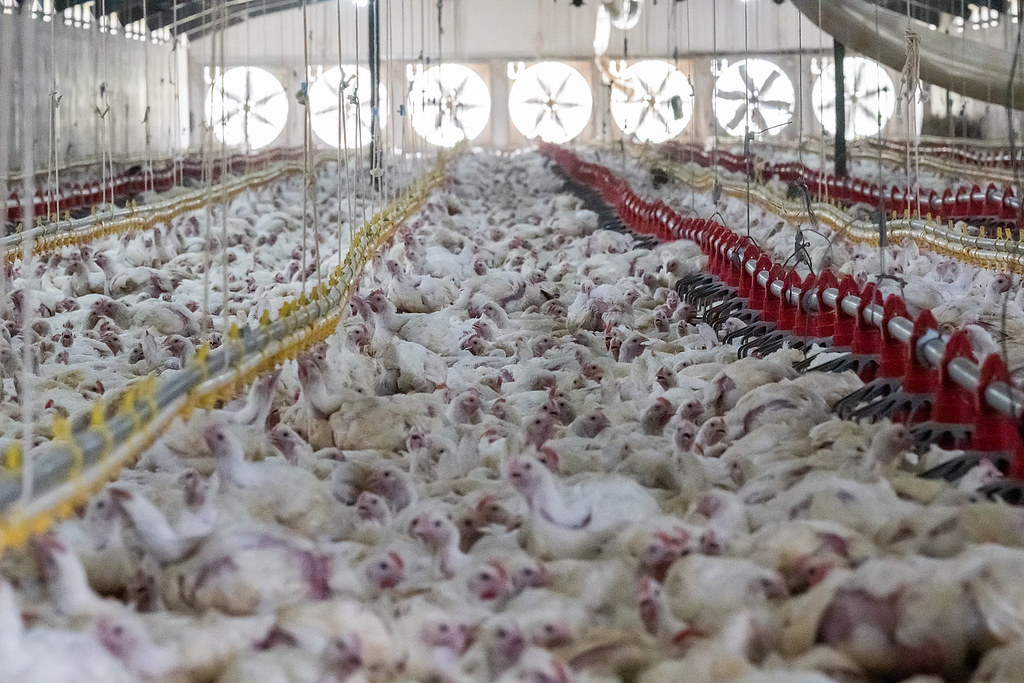
This system, known as factory farming or Concentrated Animal Feeding Operations (CAFOs), has mastered the art of producing the maximum amount of meat for the minimum cost. But this efficiency is a carefully constructed illusion. The price tag on that chicken, or that pound of pork, is a fiction—a subsidized and externalized cost that is being paid not at the checkout counter, but by our planet's most critical life support systems: our water, our air, and our climate.
A River of Waste
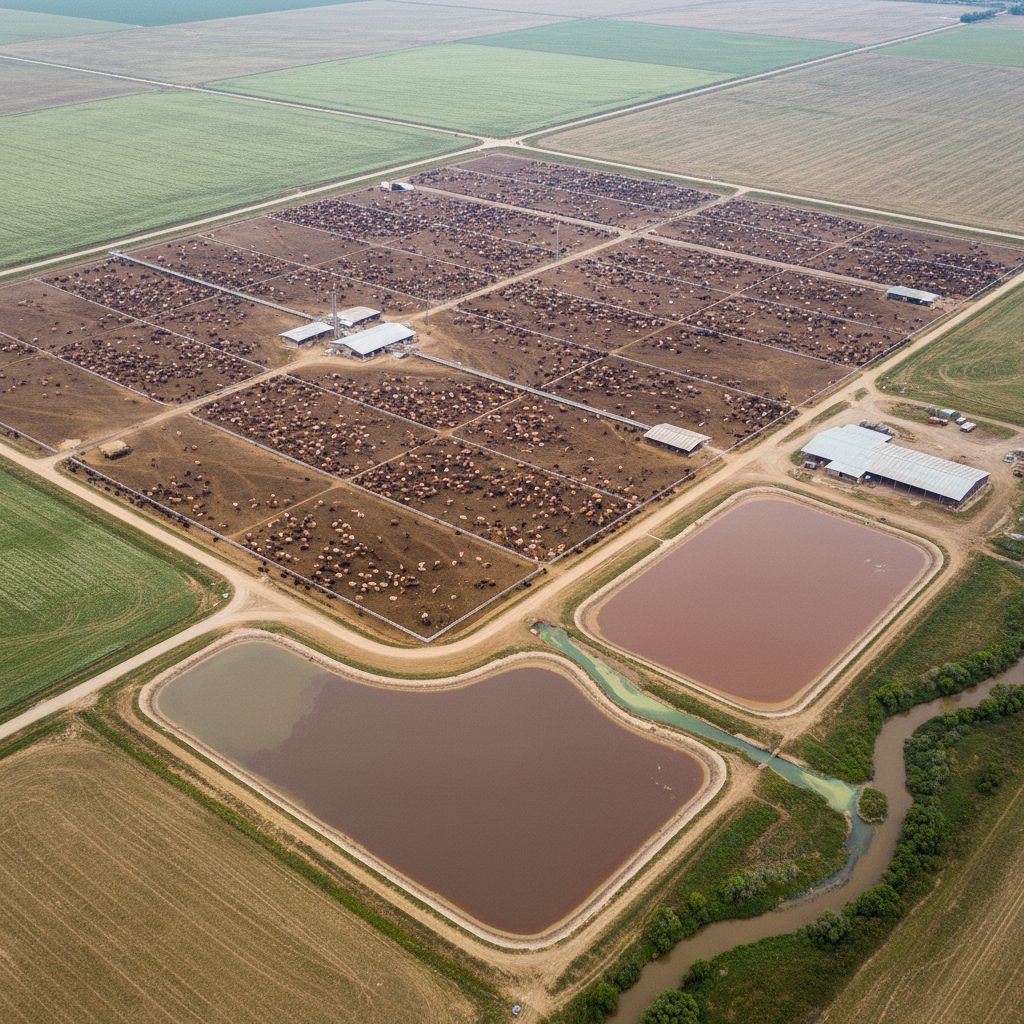
The sheer density of animals in CAFOs creates a waste problem of almost unimaginable proportions. The United States Environmental Protection Agency (EPA) has noted that the waste from these facilities poses a significant risk to water quality. Unlike human waste, which is treated in municipal sewage systems, animal waste is largely unregulated. It is typically stored in vast open-air pits, euphemistically called "lagoons," which can be several football fields in size. These lagoons are often unlined and prone to leaking, allowing a toxic slurry of nitrates, phosphates, pathogens like E. coli, and heavy metals to seep directly into groundwater.
When these lagoons overflow, as they frequently do during heavy rains, the results are catastrophic. The waste spills into nearby rivers and streams, creating sprawling "dead zones" where the sudden influx of nutrients triggers massive algal blooms. These blooms consume all the available oxygen in the water, a process called eutrophication, leading to the suffocation of fish and other aquatic life. A major report by the Guardian highlighted the devastating impact of agricultural runoff on waterways, linking it to major dead zones in places like the Gulf of Mexico.
"We have fundamentally transformed the nitrogen cycle on our planet more than any other process… The vast majority of that is driven by the way we grow food, and particularly the way we grow feed for animals." – A conclusion from a report by the UN's Food and Agriculture Organization.
The Methane Bomb in the Barn
The climate impact of factory farming is equally severe, though often less visible. While carbon dioxide from transportation and energy gets the most attention, animal agriculture is a primary global source of two other potent greenhouse gases: methane (CH4) and nitrous oxide (N2O).
According to the UN's Food and Agriculture Organization (FAO), the livestock sector is responsible for about 14.5% of all human-caused greenhouse gas emissions. A significant portion of this comes from enteric fermentation in ruminant animals like cows—their digestive process produces huge volumes of methane, a gas that is, pound for pound, over 80 times more potent than CO2 in its first 20 years in the atmosphere. The manure lagoons mentioned earlier are also major methane factories, releasing the gas as the waste decomposes anaerobically.
Nitrous oxide, another powerful greenhouse gas with about 300 times the warming potential of CO2, is released from the high-nitrogen fertilizers used to grow the immense quantities of corn and soy required to feed these billions of animals. Global agriculture, dominated by feed crop production, is the primary driver of the alarming rise in atmospheric N2O.
| Beef (Beef Herd) | 49.9 kg CO₂eq | |
|---|---|---|
| Pork | 7.6 kg CO₂eq | |
| Chicken | 5.7 kg CO₂eq | |
| Eggs | 4.2 kg CO₂eq | |
| Tofu | 1 kg CO₂eq |
This colossal footprint means that the entire system of meat production is a primary engine of climate change, from the fossil fuels used to produce fertilizer and power farm machinery to the methane released by the animals themselves.
Slicing Up the Planet
The land requirements for animal agriculture are simply voracious. It is the single largest driver of deforestation and habitat loss globally. A landmark study published by the University of Oxford and featured in Our World in Data revealed a stark reality: meat and dairy production use 83% of the world's farmland, yet provide only 18% of our calories and 37% of our protein. This incredible inefficiency is at the heart of the environmental crisis.

Vast swaths of vital ecosystems, including the Amazon rainforest, are being slashed and burned to create pasture for cattle or to grow feed crops like soy. The vast majority of the world's soy crop—around 77%—is not fed to people in the form of tofu or edamame, but to livestock. This destruction of forests and other wildlands not only releases massive amounts of carbon into the atmosphere but also decimates biodiversity, pushing countless species toward extinction.
The Inefficiency of Trophic Levels: A Numbers Game
To understand why, we need to look at basic biology, specifically the concept of trophic levels. It takes, on average, around 10 pounds of grain to produce just one pound of beef. The conversion is better for pork and chicken, but the fundamental inefficiency remains.
| Food Product | Land Use (m² per 100g protein) | GHG Emissions (kg CO₂eq per 100g protein) |
|---|---|---|
| Beef (Beef Herd) | 163.6 | 49.9 |
| Lamb & Mutton | 75.9 | 19.9 |
| Pork | 7.6 | 7.6 |
| Chicken | 6.9 | 5.7 |
| Tofu (Soy) | 2.2 | 1.0 |
Source: Poore & Nemecek (2018), Science. Data aggregated via Our World in Data.
The table above starkly illustrates the disparity. Plant-based proteins like tofu require a tiny fraction of the land and generate a mere sliver of the greenhouse gas emissions compared to their animal-based counterparts. We are essentially filtering calories and protein through animals, losing the vast majority of the original energy from the plants in the process.
The Myth of Sustainable Intensification
Proponents of the current system often argue for "sustainable intensification"—the idea that we can make factory farming more efficient to lessen its impact. This might involve methane-capture systems, more precise feeding formulas, or genetically engineering animals to grow faster or produce less waste. While some of these technologies can offer marginal improvements, they fail to address the fundamental, systemic flaws:
- The Scale is the Problem: A 10% reduction in methane from a system that houses 100,000 cows in a single location is still an environmental disaster. The sheer concentration of animals and waste is the core issue.
- The Inefficiency is Unavoidable: The laws of thermodynamics cannot be cheated. Converting plants to meat will always involve a massive loss of energy and resources.
- It Ignores the Land Use Crisis: Intensification does not solve the reality that half of the world's habitable land is already used for agriculture, with the vast majority of that dedicated to livestock and feed.
Ultimately, "greening" the factory farm is like trying to build a more efficient coal plant. It may slightly reduce the harm per unit of output, but it doesn't change the fact that the entire model is inherently destructive and outdated.

Charting a Path Forward
The picture painted here is grim, but it is not without hope. The very inefficiency of the current system is also its greatest weakness and our greatest opportunity. Because it takes so many resources to produce animal products, even small shifts in our consumption patterns can have an outsized, positive impact on the environment.
Moving towards a more plant-based food system is not about individual purity or perfection; it is a pragmatic and powerful strategy for planetary repair. It is the single biggest lever we can pull to reduce our personal environmental footprint. A person who shifts from a high-meat diet to a plant-based one can reduce their food-related emissions by up to 73%, according to the most comprehensive analysis to date from the University of Oxford.
Frequently Asked Questions
Isn't regenerative grazing or "grass-fed" beef a better solution?
While well-managed grazing can offer some soil health benefits, it is not a scalable solution to the world's protein needs. The land requirements for grass-fed beef are even more extensive than for factory-farmed beef, meaning it would require converting even more forests and wildlands into pasture to meet current demand, which would be environmentally catastrophic.
What about the livelihoods of farmers?
This is a critical and valid concern. A just transition for farmers is essential. Policy support should be directed toward helping farmers shift from industrial animal agriculture to growing crops for human consumption, engaging in carbon-sequestering agroforestry, or producing plant-based proteins. Many former chicken and pig farmers are already finding more profitable and ethical work through such transitions.
If I can't go fully vegan, does making small changes even matter?
Absolutely. The "perfect is the enemy of the good" mindset is a barrier to progress. Simply reducing your consumption of animal products, particularly red meat, makes a significant difference. Participating in "Meatless Mondays" or swapping beef for beans in a few meals a week, when adopted by millions, collectively frees up vast amounts of land and prevents enormous quantities of emissions.
Your Fork is a Lever of Change
The industrial meat system, with its immense political and economic power, can feel like an unstoppable monolith. But this industry has a critical vulnerability: it only exists to meet consumer demand. It produces what we, collectively, choose to buy. By altering our choices, we can send a powerful economic signal that the era of environmentally devastating, industrially produced meat must come to an end.
This week, when you walk past that supermarket cooler, take a moment to look beyond the plastic wrap and the misleading label. See the hidden rivers, the cleared forests, and the warming atmosphere in that neatly packaged product. Then, walk a few aisles over. The solutions—in the form of beans, lentils, tofu, and a vibrant world of plants—are waiting right there for you. Your choice is more powerful than you know.

Sources
- — Food Climate Research Network, University of Oxford (2017)
- — United States Environmental Protection Agency (2023)
- — Our World in Data (2021)
- — Our World in Data (2021)