


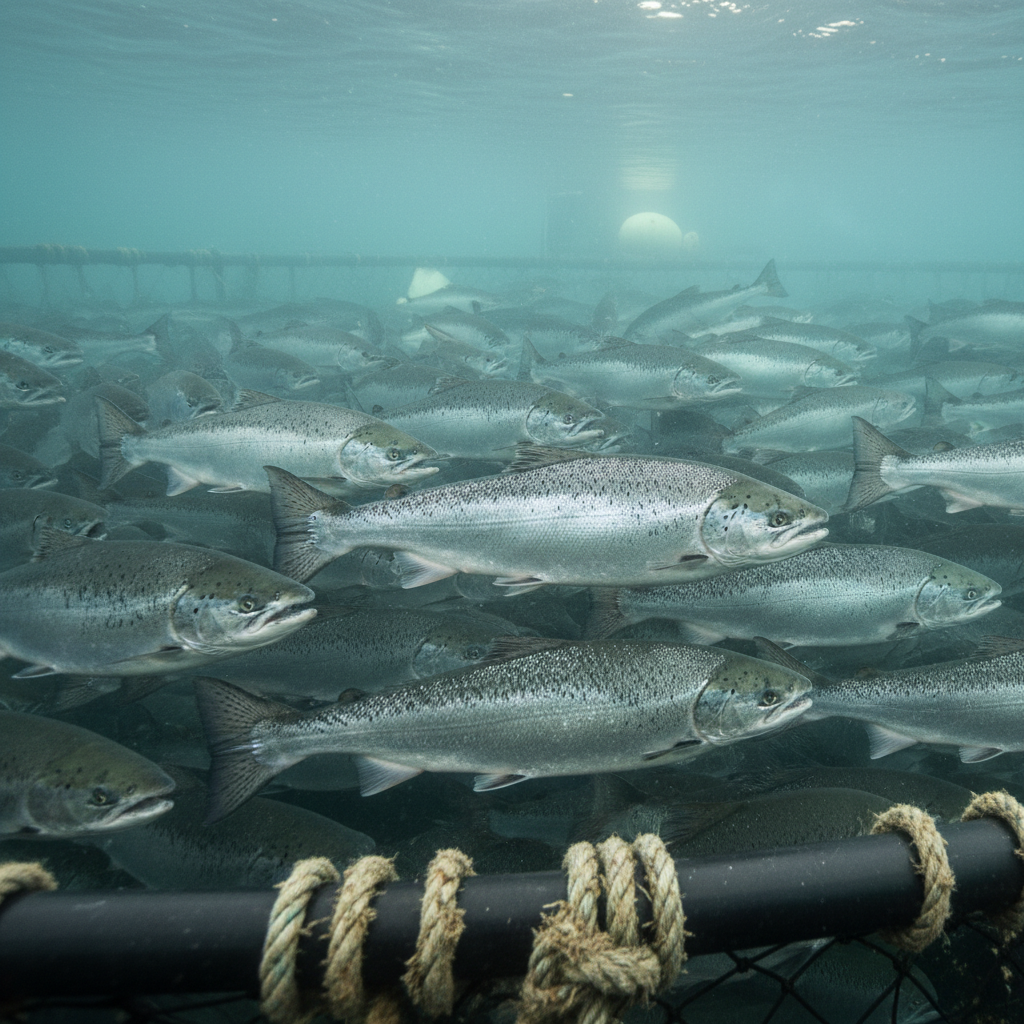
The frigid, murky green water of the Scottish loch swallows all sound, leaving only the rhythmic pulse of a diver's own breathing. Below, a vast, spectral curtain of netting materializes from the gloom. This is the wall of a salmon farm, and inside, a chaotic, silver vortex swirls with thousands of powerful bodies—a silent, desperate metropolis of fish that will never know the open ocean.
Key takeaways
- 📈 Aquaculture is the world's fastest-growing food sector, now providing over half of all fish directly consumed by humans, with an estimated 128 billion farmed finfish produced annually.
- 🔬 An overwhelming scientific consensus now confirms that fish are sentient beings who feel pain, fear, and stress, possessing complex cognitive abilities.
- ⚠️ Standard industry practices—including extreme crowding, rampant disease, parasitic infections, and inhumane slaughter methods like suffocation on ice—cause widespread, severe suffering for trillions of fish globally each year.
- ✅ Humane, commercially viable slaughter alternatives that cause instant unconsciousness, such as in-water electrical stunning, exist and are being adopted by producers, but their use lags far behind the industry's rapid growth.
- ⚖️ Governments and welfare certification bodies are slowly beginning to recognize fish sentience in law and policy, creating a pivotal opportunity to transform the welfare of the world's most numerous farmed animal.
The Blue Revolution's Hidden Cost
In the grand narrative of how we will feed a planet of ten billion people, aquaculture has been cast as a hero. Dubbed the "Blue Revolution," the farming of aquatic animals has grown at an explosive rate, far outpacing any other food production sector. Since 1990, while wild fish catches have stagnated, global aquaculture production has surged by over 600%. Today, for the first time in history, more of the seafood on our plates comes from farms than from the wild, according to the United Nations' Food and Agriculture Organization (FAO). In 2022 alone, the world produced over 67 million tonnes of farmed finfish.
This boom was driven by a simple, powerful logic: if we can't catch more fish from the sea, we must grow them ourselves. Proponents have lauded aquaculture as a resource-efficient way to produce high-quality protein, taking pressure off depleted ocean ecosystems. On the surface, it seems like an elegant solution. But beneath the waves, a story of immense, unexamined suffering has been unfolding on a scale almost too vast to comprehend.
The very efficiency of modern aquaculture is built on the industrial logic of terrestrial factory farming: density, speed, and standardization. Yet, the subjects of this industry are profoundly different—alien to our air-breathing world, silent in their distress, and for centuries, dismissed as unfeeling, stimulus-response machines. It is this dismissal that has allowed for the creation of an animal production system where conditions and practices that would be illegal to inflict on chickens or pigs are simply the status quo.
But science is now forcing a moral and ethical reckoning. The same neurological and behavioral evidence that established the sentience of mammals and birds is now irrefutably present in fish. This inconvenient truth dismantles the foundational assumption of the Blue Revolution, recasting it from a simple story of food innovation into a profound animal welfare crisis.
More Than Just a Stimulus-Response: The Science of Fish Sentience
For decades, the question "Do fish feel pain?" was a subject of casual debate, often dismissed with the folk wisdom that a fish has a three-second memory. Today, it is no longer a serious scientific question. An overwhelming body of peer-reviewed research has led to a firm consensus: the balance of evidence indicates that fish are sentient and that they experience pain.
Key findings that support fish sentience include:
- Anatomy: Fish possess the necessary biological hardware for pain perception. This includes nociceptors, the specialized nerve endings that detect painful stimuli like heat, pressure, or chemicals. These signals are transmitted to brain regions that are functionally equivalent to those in mammals, like the pallium (similar to the human cortex).
- Physiology: When injured, fish produce endogenous opioids, the body's natural painkillers, just as humans do. Furthermore, administering painkillers like morphine or aspirin can reduce or eliminate the behavioral signs of pain.
- Behavior: The behavioral response of fish to injury is far more complex than a simple reflex. They exhibit guarding behaviors, rub afflicted areas, and show prolonged changes in behavior, such as a loss of appetite and reduced activity. In a landmark 2009 study by Dr. Lynne Sneddon, a pioneer in the field, trout injected with bee venom in their sensitive lips were observed rubbing their mouths on the gravel of their tank and rocking back and forth—complex behaviors indicative of distress, not just a reflex.
"The science is now clear… To say that they don't feel pain is to ignore a huge body of evidence. We should afford them the same protection as any other vertebrate." — Dr. Lynne Sneddon, Director of Bioveterinary Science, University of Gothenburg
This scientific understanding transforms our relationship with the animals at the heart of aquaculture. They are not swimming vegetables. They are conscious beings with an awareness of their world and a capacity to suffer within it. This recognition is the lens through which we must examine the reality of life—and death—inside a modern fish farm.
Life in the Pen: A Chronic State of Stress
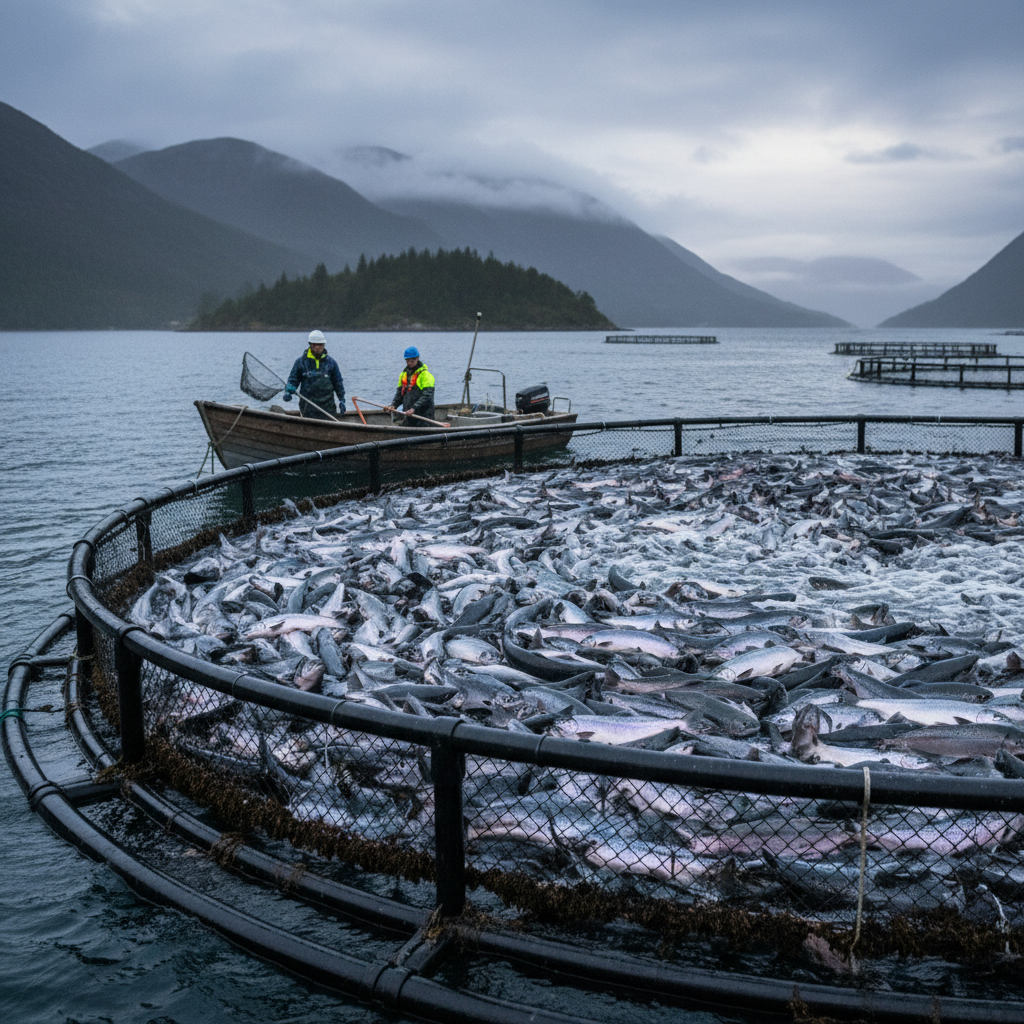
Imagine spending your entire life in a space equivalent to a bathtub with a dozen other people, never able to escape the press of bodies. This is the reality for many farmed fish. Atlantic salmon, a species that would naturally migrate thousands of miles in the open ocean, are often stocked at densities of up to 25 kg per cubic meter of water. That's about 15-20 large salmon crammed into a space the size of a phone booth filled with water.
Such intense crowding is a recipe for chronic stress and disease. It is the root cause of many of the industry's most severe welfare problems.
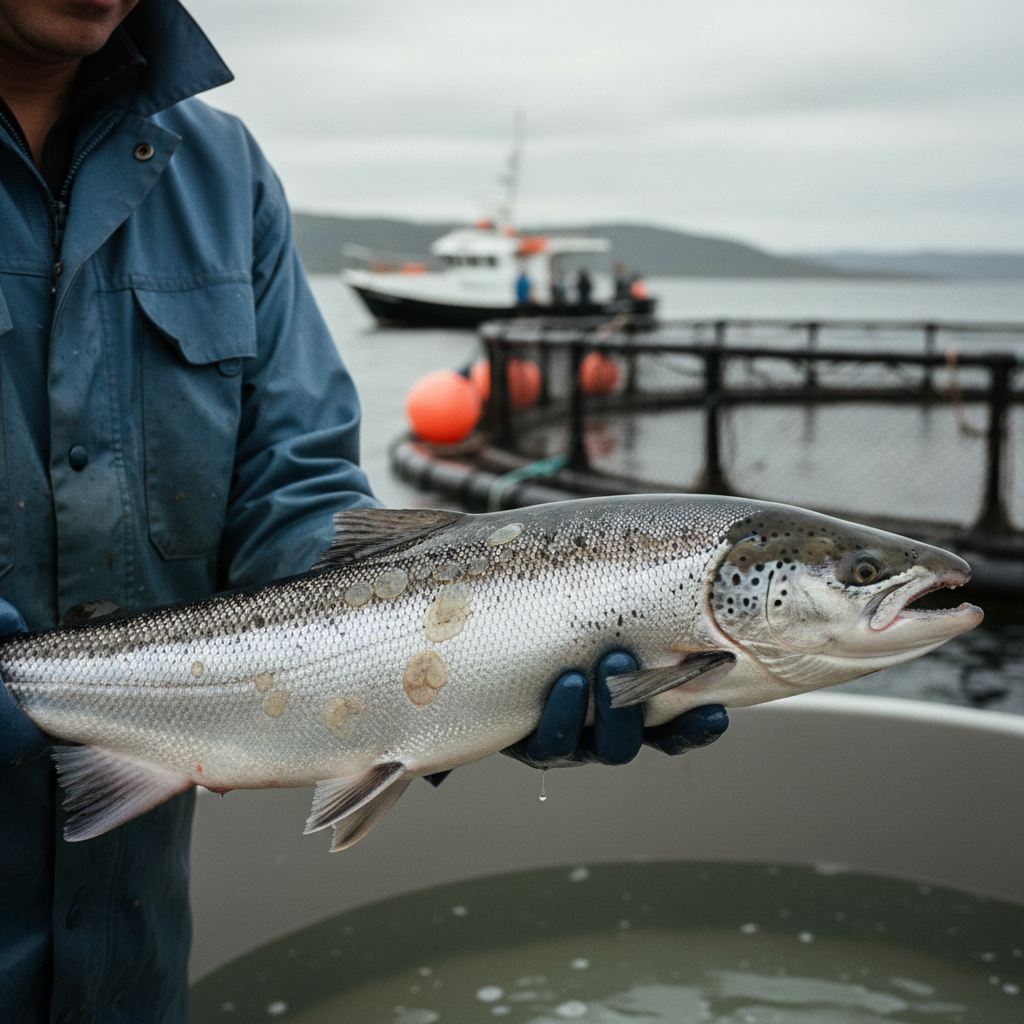
One of the most gruesome consequences is the scourge of sea lice (Lepeophtheirus salmonis). These parasitic copepods thrive in the dense conditions of salmon farms, attaching to the fish and feeding on their skin, mucus, and blood. In severe infestations, they can eat away the skin down to the skull, causing immense pain and leading to secondary infections and death. Reports from organizations like Compassion in World Farming have documented fish with "grey, ragged heads," half-eaten away by these parasites. While the industry uses various treatments—from chemical baths to "thermolicer" machines that heat the water to shock the lice off—these processes are themselves stressful and can be lethal to the already-weakened fish.
Beyond parasites, the crowded pens are breeding grounds for bacterial and viral diseases. Pancreas disease, infectious salmon anaemia, and cardiomyopathy syndrome can sweep through a farm with devastating speed, leading to mass mortality events where hundreds of thousands of fish can die in a single outbreak. The constant stress of confinement, poor water quality from accumulated waste, and aggressive interactions compromise the fishes' immune systems, leaving them vulnerable.
Key Welfare Indicators in Farmed Fish
Regulators and welfare certification schemes rely on several key indicators to assess the well-being of farmed fish. Understanding these helps reveal the systemic challenges of industrial aquaculture.
| Indicator | What It Signifies | Common Problems in Intensive Systems |
|---|---|---|
| Stocking Density | The amount of fish (in kg) per unit of water volume (m³). | Overcrowding, stress, aggression, disease. |
| Water Quality | Levels of dissolved oxygen, ammonia, and nitrites from metabolic waste. | Low oxygen (hypoxia), toxic waste buildup. |
| Fin Condition | The state of the dorsal and tail fins, which can be eroded by nipping from other fish or abrasion on nets. | A clear sign of chronic stress and conflict. |
| Parasite Load | The number of parasites, like sea lice, on an individual fish. | High loads cause pain, lesions, and death. |
| Mortality Rate | The percentage of fish that die before reaching slaughter weight. | Rates can exceed 20% on some farms. |
| "Star-gazing" | Abnormal swimming behaviors, such as floating listlessly or swimming in circles. | Indicates severe stress or neurological damage. |
These indicators paint a bleak picture. The very design of the system—maximizing biomass in a minimal volume—creates a state of perpetual environmental and social stress that is anathema to the biological needs of the animals.
| 1990 | 14.1 Million Tonnes | |
|---|---|---|
| 2000 | 26.9 Million Tonnes | |
| 2010 | 47.3 Million Tonnes | |
| 2020 | 63.4 Million Tonnes | |
| 2022 | 67.2 Million Tonnes |
The Moment of Death: A Systemic Failure of Compassion
For the billions of fish that survive the grueling conditions of the grow-out phase, their final moments are often the most brutal part of their existence. While regulations in many countries mandate that land animals be rendered unconscious before slaughter, fish have been almost entirely excluded from this consideration. The most common slaughter methods used in global aquaculture are inhumane, causing prolonged, terrifying, and painful deaths.
For trillions of individuals, their last experience on Earth is one of terror, suffocation, and being frozen or crushed to death.
The most prevalent methods include:
-
Asphyxiation on Ice (Ice Slurry): Fish are pulled from the water and dumped into a vat of ice or ice-cold water. This is not a humane death. The cold paralyzes the fish, but it does not render them unconscious. They remain sentient, slowly suffocating as their gills cease to function and ice crystals may form on their gills, causing intense pain. Depending on the species, it can take over 15 minutes for them to die.
-
Asphyxiation in Air: In many operations, fish are simply removed from the water and left to suffocate on a conveyor belt or in a crate. This is a terrifying and protracted death that can last for many minutes.
-
Carbon Dioxide (CO₂) Narcosis: Fish are placed in water saturated with carbon dioxide. While often presented as a more "gentle" alternative, research shows CO₂ is highly aversive to fish, creating a sensation of breathlessness and panic long before unconsciousness is induced. It is akin to being gassed in an environment one cannot escape.
-
Exsanguination without Stunning: In some processing plants, the fish have their gills cut while they are still fully conscious, leaving them to bleed out in a tank of water, a process that is both painful and terrifying.
Comparing Common Slaughter Methods
| Method | Welfare Impact | Speed to Insensibility | Industry Adoption |
|---|---|---|---|
| Ice Slurry | Very Poor: Causes slow suffocation, panic, and pain from ice crystals. | 5-15+ minutes | Widespread |
| Asphyxiation in Air | Very Poor: Causes prolonged, terrifying suffocation. | 5-15+ minutes | Common, less industrial |
| CO₂ Narcosis | Poor: Highly aversive, causes panic and attempts to escape before loss of Cconsciousness. | 2-5 minutes | Common |
| Manual Percussive Stunning | Good: If accurate, causes immediate brain death. Risk of mis-stunning. | <1 second | Limited |
| Electrical Stunning | Excellent: When applied correctly in water, causes immediate unconsciousness. | <1 second | Growing, but not standard |
This systemic failure to provide a humane end-of-life is perhaps the starkest example of the industry's ethical blind spot. The sheer numbers involved mean that this is arguably the single greatest cause of animal suffering in the food system today.
A Better Way: The Promise of Humane Slaughter Technology
Fortunately, the grim picture of fish slaughter is not without points of light. Motivated by scientific evidence, pressure from welfare advocates, and the demands of retailers, a new generation of technology is proving that humane slaughter is not only possible but commercially viable.
The most promising systems fall into two categories: percussive and electrical stunning.
Percussive stunning involves delivering a swift, targeted blow to the head, causing immediate brain death. While this can be done manually with a priest (a small club), automated systems have been developed that can process large numbers of fish with high accuracy. The fish are channeled into a machine that positions them correctly for a pneumatic bolt to strike the head.
Electrical stunning is even more scalable and is considered the gold standard by many welfare experts. In the most effective "in-water" systems, fish are guided into a chamber or onto a conveyor where they are exposed to an electrical field that passes through their brain and heart, inducing immediate and irreversible unconsciousness (a stun-kill). This happens in less than a second, ensuring the fish has no awareness of the subsequent bleeding or processing steps.
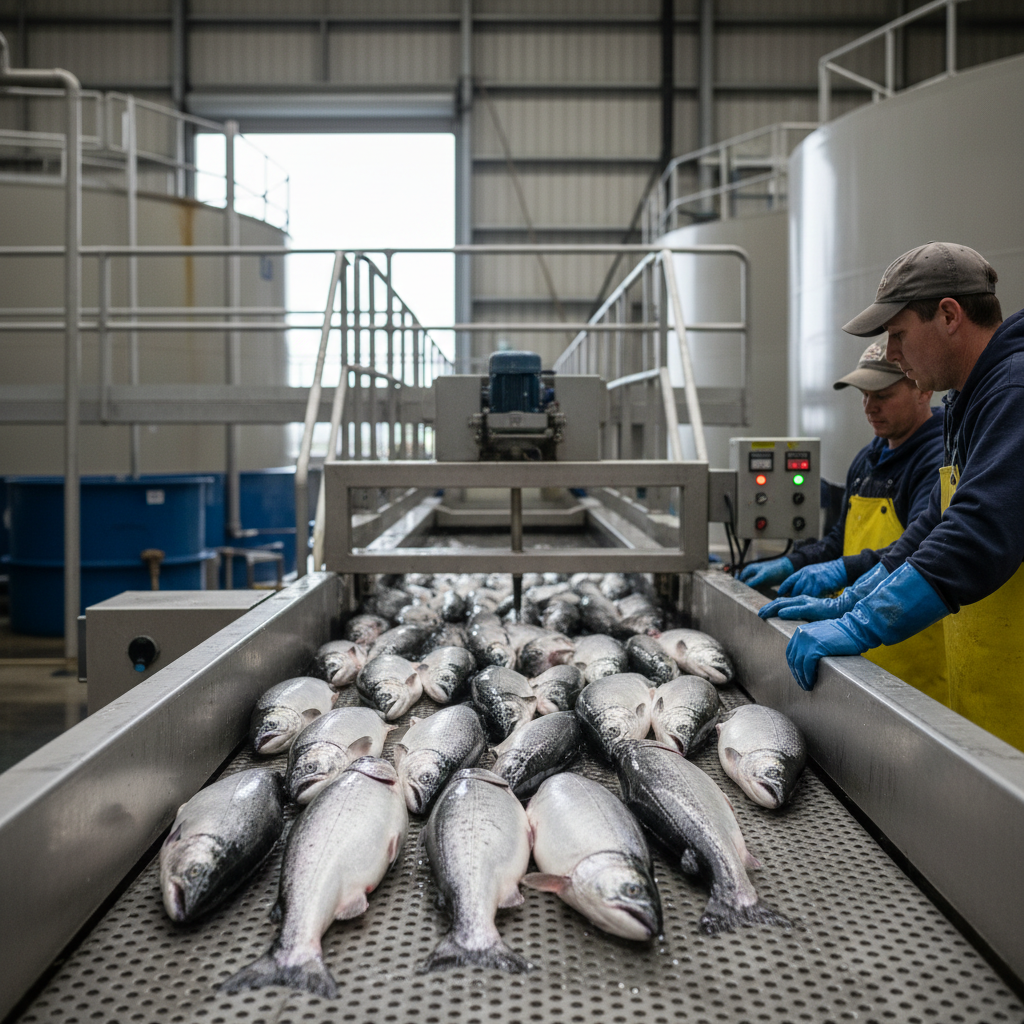
Companies like Ace Aquatec, a Scottish technology firm, have developed and commercialized these in-water electrical stunners for species like salmon, tilapia, and trout. Producers who have adopted this technology report not only vast improvements in animal welfare but also benefits to their product quality. A fish that dies in a state of extreme stress and struggle experiences muscle damage and a buildup of lactic acid, which can negatively affect the texture and shelf life of the fillet. A swift, humane death results in a better final product.
The challenge is no longer one of technical feasibility but of will and investment. While progressive producers and some retailers are embracing these new standards, the vast majority of the global aquaculture industry continues to rely on the old, cruel methods. Changing this will require a concerted push from regulators, consumers, and investors.
By the numbers
- >50%: Share of seafood for direct human consumption that now comes from aquaculture. (FAO)
- ~128 Billion: Estimated number of individual finfish farmed annually worldwide. (Aquatic Life Institute)
- >20%: The average pre-slaughter mortality rate on some Scottish salmon farms, representing millions of fish dying from disease and stress. (Fish Health Inspectorate Scotland)
- <5%: Estimated percentage of the global farmed fish industry that uses humane slaughter methods. (Author estimate based on NGO reports)
- 15+ Minutes: The time it can take for a fish to die by suffocation in an ice slurry. (Humane Slaughter Association)
- £180 Million: The annual cost of managing sea lice for the Scottish salmon industry alone. (The Guardian)
The Path Forward: Policy, Certification, and Consumer Choice
The tide of opinion is slowly beginning to turn. In a landmark move, the United Kingdom formally recognized the sentience of fish (specifically, vertebrate animals) and cephalopod mollusks in its Animal Welfare (Sentience) Act 2022. This legal recognition doesn't automatically change practices on farms, but it creates a powerful legal and moral framework for demanding stronger regulations.
For consumers, navigating the seafood aisle can feel overwhelming. However, meaningful choices are possible. Third-party welfare certification schemes are one of the most powerful tools for driving change. When looking for farmed fish, seek out products with certifications that have strong, explicit standards for humane slaughter.
- RSPCA Assured: This UK-based certification has some of the most comprehensive welfare standards, including a strict requirement for humane slaughter (percussive or electrical stunning).
- Global Animal Partnership (G.A.P.): Known for its 5-Step Animal Welfare Rating for land animals, G.A.P. has developed standards for salmon and other species that require humane slaughter methods in their higher tiers.
- Aquaculture Stewardship Council (ASC): The most common eco-label on farmed seafood, the ASC has recently updated its standards to mandate stunning before slaughter, though critics point out implementation timelines are long and some less-effective stunning methods are still permitted.
Ultimately, transforming an industry of this scale requires a multi-pronged approach. We need robust government regulation that sets a minimum floor for welfare, including a clear mandate for humane slaughter. We need investment from the industry itself to upgrade infrastructure and adopt new technologies. And we need continued pressure from welfare organizations and informed consumers who refuse to accept the hidden suffering that has underpinned the Blue Revolution for too long.
Frequently Asked Questions
Do fish really feel pain?
Yes. The overwhelming scientific consensus is that fish possess the necessary neurobiological structures and demonstrate the appropriate behavioral and physiological responses to conclude that they feel pain. They are recognized as sentient beings under new laws in the UK and other jurisdictions.
What is 'humane slaughter' for a fish?
A humane slaughter method is one that renders the animal unconscious and insensible to pain instantly, or as close to instantly as possible (<1 second), and ensures they do not regain consciousness before death. For fish, effective in-water electrical stunning and effective percussive stunning meet this definition, while methods like suffocation on ice or CO₂ gassing do not.
Are wild-caught fish a better alternative from a welfare perspective?
Not necessarily. While wild fish live free from the chronic stresses of confinement, their end-of-life welfare is often extremely poor. Many forms of commercial fishing involve crushing in nets, barotrauma (injury from pressure changes), and slow suffocation on the deck of a boat over many minutes or even hours. There is currently very little regulation governing the welfare of wild-caught fish at the point of capture.
What do welfare certifications on seafood actually mean?
They mean that the farm has been audited by a third party against a specific set of standards. However, the quality of these standards varies dramatically. Look for certifications like RSPCA Assured or G.A.P. that have publicly available, detailed requirements covering stocking density, water quality, health treatments, and, crucially, a strict mandate for humane, pre-slaughter stunning.
Isn't aquaculture necessary to feed the world and protect wild fish stocks?
Aquaculture plays a vital role in global food security. The issue is not its existence, but its practice. It is possible to farm fish in a way that dramatically reduces suffering by lowering stocking densities, improving water quality, and insisting on humane slaughter. Furthermore, many popular farmed species like salmon are carnivorous and are fed large quantities of wild-caught "feeder fish," which means they can still place a significant strain on ocean ecosystems.
For decades, we have looked at the shimmering surface of the water and seen only a resource. Now, science has given us a window beneath that surface, revealing the complex, sentient lives of the animals within. The question is no longer whether they suffer, but what we are willing to do about it. The future of the Blue Revolution need not be a story of mass suffering, but one of responsible innovation where both human needs and animal welfare are given their due respect. It's time to demand a more compassionate harvest.
Sources
- — Food and Agriculture Organization of the United Nations (2024)
- — UK Government (2022)
- — Our World in Data (2021)

