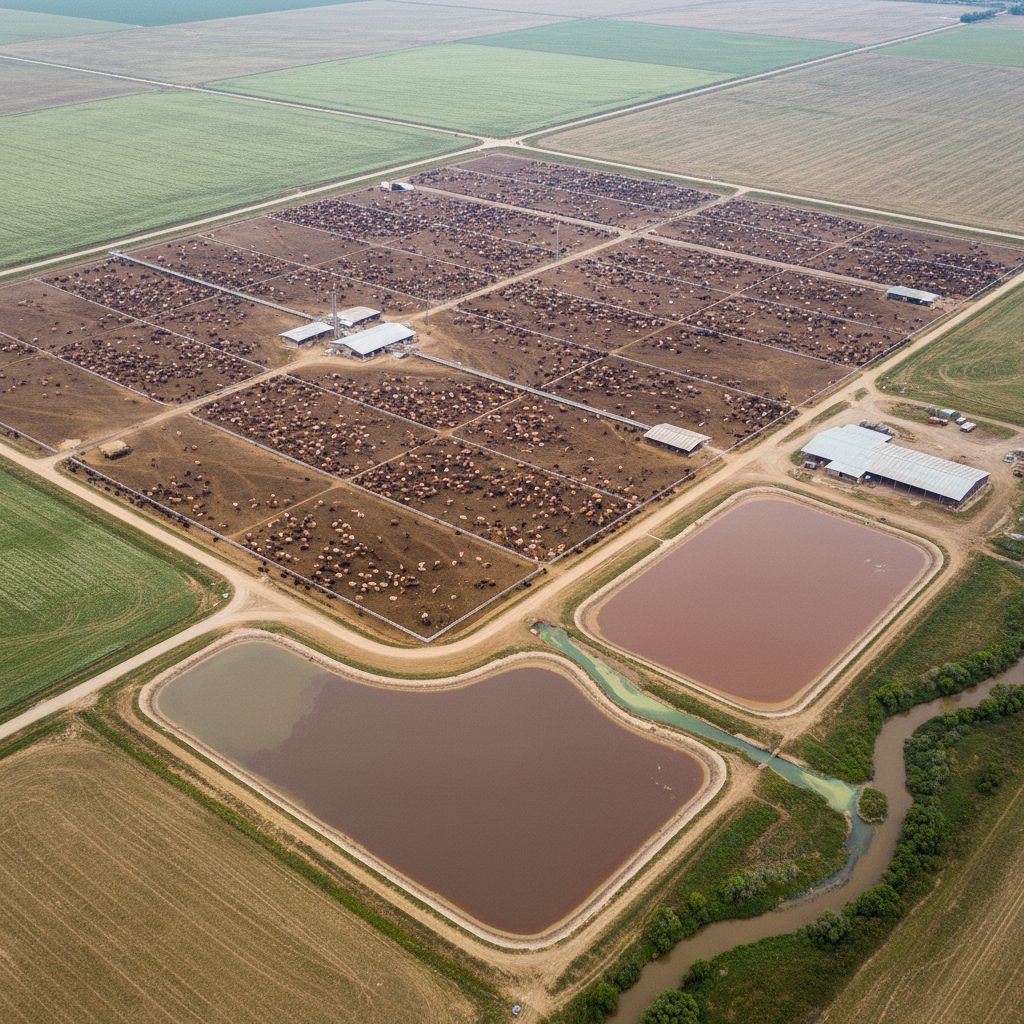

The image is a potent one, seared into our collective consciousness: a lone cow on a rolling green hill, a red barn in the background, the picture of pastoral harmony. It’s an image that sells milk, markets cheese, and assures us that the animal products on our plates come from a place of rustic simplicity. But for the vast majority of the 80 billion land animals raised for food globally each year, this idyllic scene is a fantasy. The reality is industrial, mechanical, and, most critically for our shared future, a staggering engine of climate change and environmental devastation.

We have become adept at discussing the climate impact of our cars, our flights, and our power plants. We install solar panels, champion electric vehicles, and debate carbon taxes. Yet, the single most impactful climate action available to many people remains the most overlooked and fiercely defended: our diet. The inconvenient truth is that the global food system, and specifically industrial animal agriculture, is a primary driver of greenhouse gas emissions, deforestation, biodiversity loss, and water depletion. To confront the climate crisis with intellectual honesty, we must look beyond the tailpipe and onto our plates.
More Than Just Methane: A Whole-System Problem
When animal agriculture is discussed in the context of climate change, the conversation often begins and ends with methane. It’s true that methane is a significant part of the problem. As a greenhouse gas, it is more than 80 times more potent at trapping heat than carbon dioxide over a 20-year period. The primary agricultural source of this methane is enteric fermentation—the digestive process of ruminant animals like cows, sheep, and goats. The scale is immense: the global livestock sector is responsible for about 14.5% of all anthropogenic greenhouse gas emissions, a share comparable to the entire global transportation sector. The United Nations Food and Agriculture Organization (FAO) has identified it as "a major stressor on many ecosystems and on the planet as a whole."
However, focusing solely on methane belies the true, systemic nature of the environmental damage. The climate hoofprint of animal agriculture is a complex lifecycle of interconnected impacts:
- Land Use Change: Forests, wetlands, and grasslands—all critical carbon sinks—are cleared at an alarming rate to create pasture for grazing animals and to grow the immense quantities of feed crops they require. Deforestation, particularly in vital ecosystems like the Amazon rainforest, releases billions of tons of stored carbon into the atmosphere.
- Feed Production: Nearly 40% of the world’s arable land is used to grow feed for livestock, not food for humans. The industrial production of these crops, primarily soy and corn, relies heavily on nitrogen fertilizers, which release nitrous oxide (N2O), a greenhouse gas nearly 300 times more potent than CO2.
- Manure Management: The concentration of thousands or even hundreds of thousands of animals on a single factory farm generates enormous quantities of waste. These manure "lagoons" release both methane and nitrous oxide as the waste decomposes.
- Energy Consumption: The machinery, transportation, processing, and refrigeration required to turn a living animal into a packaged product are all energy-intensive processes, overwhelmingly powered by fossil fuels.
This is not a peripheral issue; it is a central pillar of the climate crisis. The entire system—from the clearing of the land to the plastic wrap on the final cut of meat—is saturated with emissions.

The Long Shadow of Livestock: Land Use and Deforestation
To grasp the scale of animal agriculture is to grasp its spatial dominance of our planet. Livestock, and the crops grown to feed them, occupy an almost unfathomable amount of land. Globally, grazing land and cropland dedicated to animal feed production use approximately 80% of all agricultural land. To put that in perspective, this land area is equivalent to the entire North and South American continents combined.
This enormous footprint is the primary engine of global deforestation. In the Amazon, the world's largest and most vital rainforest, cattle ranching is responsible for as much as 80% of current deforestation rates. Every second, an area of rainforest the size of a football field is cleared to make way for more cattle. This destruction serves a dual blow to the climate. First, it eliminates a critical carbon sink, a forest that would otherwise be absorbing CO2 from the atmosphere. Second, the act of burning the forest releases the massive quantities of carbon stored in the trees and soil directly into the air. It’s a devastating one-two punch that sabotages our planet's natural ability to regulate its climate.
"We are, quite literally, gambling with the future of our planet for the sake of hamburgers." – Dr. Jonathan Foley, climate scientist and Executive Director of Project Drawdown.
The inefficiency is staggering. We filter calories and protein through animals, losing most of the energy in the process. For every 100 calories of grain we feed to a chicken, we get only about 12 calories back in the form of meat. For a cow, that number plummets to just 3 calories. We are using a vast portion of our planet’s habitable land to grow food for animals, not for people, with devastating consequences for our climate and wild ecosystems.
A Tale of Two Proteins: Ruminants vs. The Rest
The climate impact of different foods varies dramatically. When it comes to animal products, ruminant animals like cattle and sheep are in a category of their own due to the methane they produce through digestion. Pork and poultry, being monogastric animals, have a significantly lower, though still substantial, environmental footprint. Plant-based proteins, however, are consistently and overwhelmingly the most climate-friendly option.
A landmark 2018 study in the journal Science by Joseph Poore and Thomas Nemecek analyzed data from nearly 40,000 farms in 119 countries to quantify the full lifecycle impacts of different foods. The results are a stark illustration of this protein hierarchy.
Here’s how they stack up when you look at the greenhouse gas emissions per kilogram of final product:
| Lebensmittelprodukt | Greenhouse Gas Emissions (kg CO₂eq per kg) |
|---|---|
| Beef (Beef Herd) | ~60 kg |
| Lamm & Hammelfleisch | ~24 kg |
| Schweinefleisch | ~7 kg |
| Geflügel | ~6 kg |
| Tofu (Soybeans) | ~2 kg |
| Lentils | ~0.9 kg |
This data reveals a clear climate hierarchy. Shifting from beef to chicken can reduce the emissions associated with that meal by over 90%. Shifting from chicken to lentils or tofu reduces them by another 80-85%. The differences are not minor; they are monumental.
| Beef (Beef Herd) | 60 kg CO₂eq | |
|---|---|---|
| Lamm & Hammelfleisch | 24 kg CO₂eq | |
| Schweinefleisch | 7 kg CO₂eq | |
| Geflügel | 6 kg CO₂eq | |
| Tofu | 2 kg CO₂eq | |
| Lentils | 0.9 kg CO₂eq |
The Myth of "Sustainable" Meat: Can Technology Save Us?
As public awareness of animal agriculture’s environmental toll grows, the industry has responded with promises of "sustainable" meat and technological fixes. We hear about "regenerative grazing," feed additives that reduce methane burps, and even high-tech masks for cows to capture their emissions. While some of these strategies have marginal benefits and represent good-faith efforts to mitigate harm, they are insufficient to address the fundamental problem of scale.
Regenerative grazing, for instance, proposes that well-managed pastures can sequester carbon in the soil, potentially offsetting the emissions of the cattle themselves. While improved grazing techniques can certainly improve soil health, a growing body of research, including a comprehensive analysis from the University of Oxford's Food Climate Research Network, concludes that the sequestration potential is time-limited and ultimately dwarfed by the sheer volume of methane emissions. It cannot make beef a climate-positive food.
Similarly, technological fixes like methane-inhibiting feed additives made from seaweed show promise in controlled trials, but their scalability, cost, and long-term efficacy across the diversity of the global herd are unproven. These innovations are attempts to slightly reduce the damage of an inherently inefficient and destructive system. They are like trying to engineer a more fuel-efficient Hummer; the result is still a gas-guzzler, and the real solution is to choose a different mode of transport altogether.
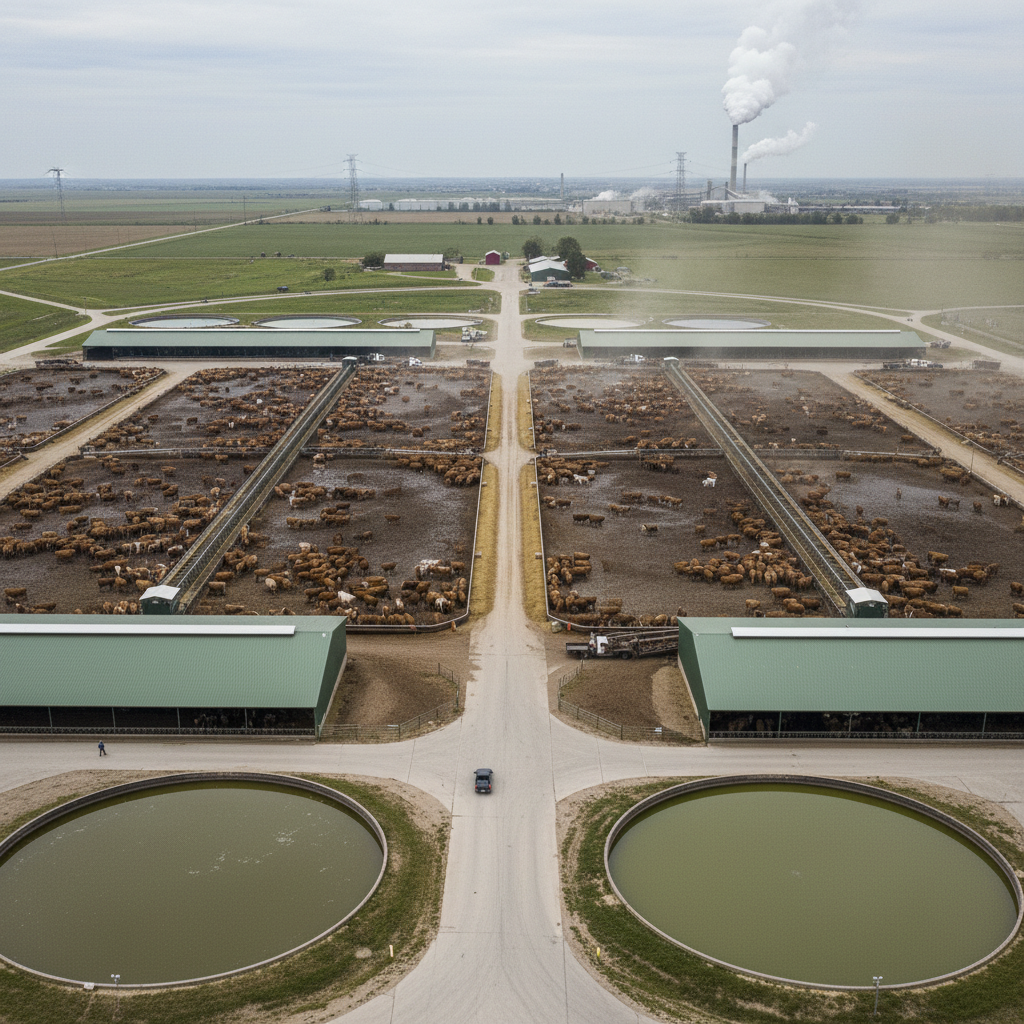
The core issue is that we are raising an unsustainable number of animals. No amount of tinkering at the edges can erase the fundamental biophysical reality: it takes vastly more land, water, and energy to produce a gram of protein from an animal than from a plant.
The Power of the Plate: A Path Forward
Confronting these realities can feel overwhelming, but the data also contains a message of profound empowerment. If our food system is a major driver of the climate crisis, then changing how we eat is one of the most powerful levers we have for creating a sustainable future. The EAT-Lancet Commission, a consortium of 37 leading scientists from 16 countries, concluded that a global shift toward more plant-rich diets is a prerequisite for meeting the Paris Agreement climate targets and sustainably feeding a global population of 10 billion by 2050.
This doesn’t mean everyone must adopt a strict vegan diet overnight. The data shows a spectrum of impact, and every step away from high-impact animal products and toward plant-based alternatives is a meaningful step in the right direction. Here are concrete actions we can take:
- Reduce Ruminants: Make beef and lamb a rare indulgence, not a staple. Simply replacing beef with chicken or pork for most meals can drastically cut your dietary emissions.
- Embrace Plant-Based Proteins: Actively incorporate more beans, lentils, chickpeas, tofu, tempeh, and seeds into your diet. They are nutritious, affordable, and have a fraction of the environmental footprint.
- Try Meatless Mondays: Committing to one plant-based day a week is an accessible entry point that significantly reduces your annual food footprint.
- Reframe Your Plate: Instead of seeing meat as the centerpiece of every meal, treat it as a garnish or flavoring. Build meals around a diverse base of vegetables, grains, and legumes.

This transition is not about deprivation; it is about discovery. It’s an opportunity to explore new cuisines, new flavors, and a new way of eating that aligns with our values and our desire for a livable planet.
Häufig gestellte Fragen
What about "grass-fed" beef? Is it better for the climate?
While grass-fed beef may offer some animal welfare and land-management benefits over factory-farmed, grain-fed beef, it is not a solution to the climate problem. Grass-fed cows tend to grow more slowly and thus emit more methane over their lifetime. While well-managed pastures can sequester some carbon, multiple major studies conclude this effect is small, easily reversible, and ultimately outweighed by the cattle's direct emissions.
Don't plants like almonds and avocados use a lot of water too?
Yes, some plant foods are water-intensive. However, the comparison to animal products is not even close. Producing one kilogram of beef requires, on average, over 15,000 liters of water. Producing one kilogram of lentils, by contrast, requires about 1,250 liters. Even thirsty plants like almonds use significantly less water per calorie or per gram of protein than any animal product.
Can't we just use technology to make animal farming more sustainable?
Technology can help mitigate some harms, but it cannot solve the fundamental inefficiency of cycling calories through animals. Methane-capture masks or feed additives are small fixes to a massive systemic problem. Given the projected growth in global meat demand, these marginal gains are unlikely to keep pace with the industry's expanding overall footprint. The most effective and scalable solution remains a dietary shift.
Is individual action enough, or do we need systemic change?
Both are essential and mutually reinforcing. Individual choices create demand for plant-based products, which drives market innovation and makes these options more accessible and affordable. At the same time, we need governments to end subsidies for industrial animal agriculture and feed crops, and to instead support farmers in transitioning to more sustainable, plant-focused farming. Your personal choices send a powerful market and social signal that catalyzes this broader systemic change.
A Call for Conscious Consumption
The science is clear. Our planet cannot sustain our current and projected levels of meat and dairy consumption. The pastoral fantasy of animal agriculture has given way to an industrial reality with catastrophic climate consequences. We stand at a critical juncture, armed with the knowledge of what is at stake and the power to change course. This is not a call for perfection, but a call to consciousness. It is an invitation to look at our plates not just as a source of sustenance, but as a connection to the Earth, and to make choices that honor that connection. Let us choose a future where our food system heals rather than harms, a future where our plates are filled with compassion, and a future where we leave a legacy of a healthy, thriving planet for generations to come.
Quellen
- — Ernährungs- und Landwirtschaftsorganisation der Vereinten Nationen (2013)
- — Unsere Welt in Daten (2021)
- — Food Climate Research Network, University of Oxford (2017)
- — Umweltschutzbehörde der Vereinigten Staaten (2023)
- — UN Environment Programme (2021)